
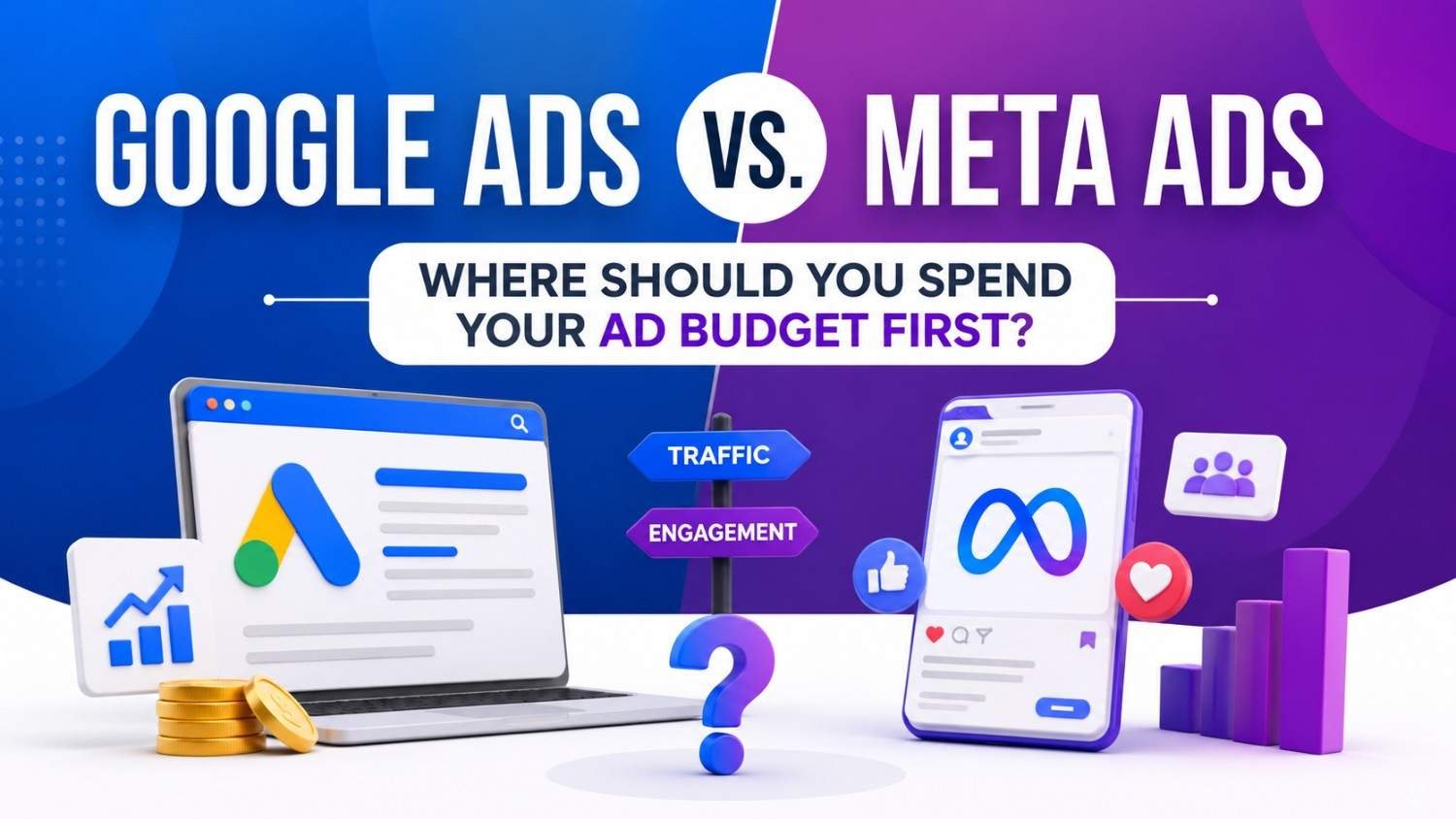
Running paid advertising is kind of one of the fastest ways to get leads, boost website traffic, and grow sales. But, one of the toughest parts for businesses—especially startups and smaller firms—is figuring out where to put their advertising money. When marketing funds are limited, picking the wrong platform can end in wasted spending, low caliber leads, and returns that disappoint everyone. A lot of business owners end up asking the same thing, like should they throw effort into Google Ads, where people are already actively searching for products and services, or Meta Ads, where brands can tap into pretty specific audiences across Facebook and Instagram?
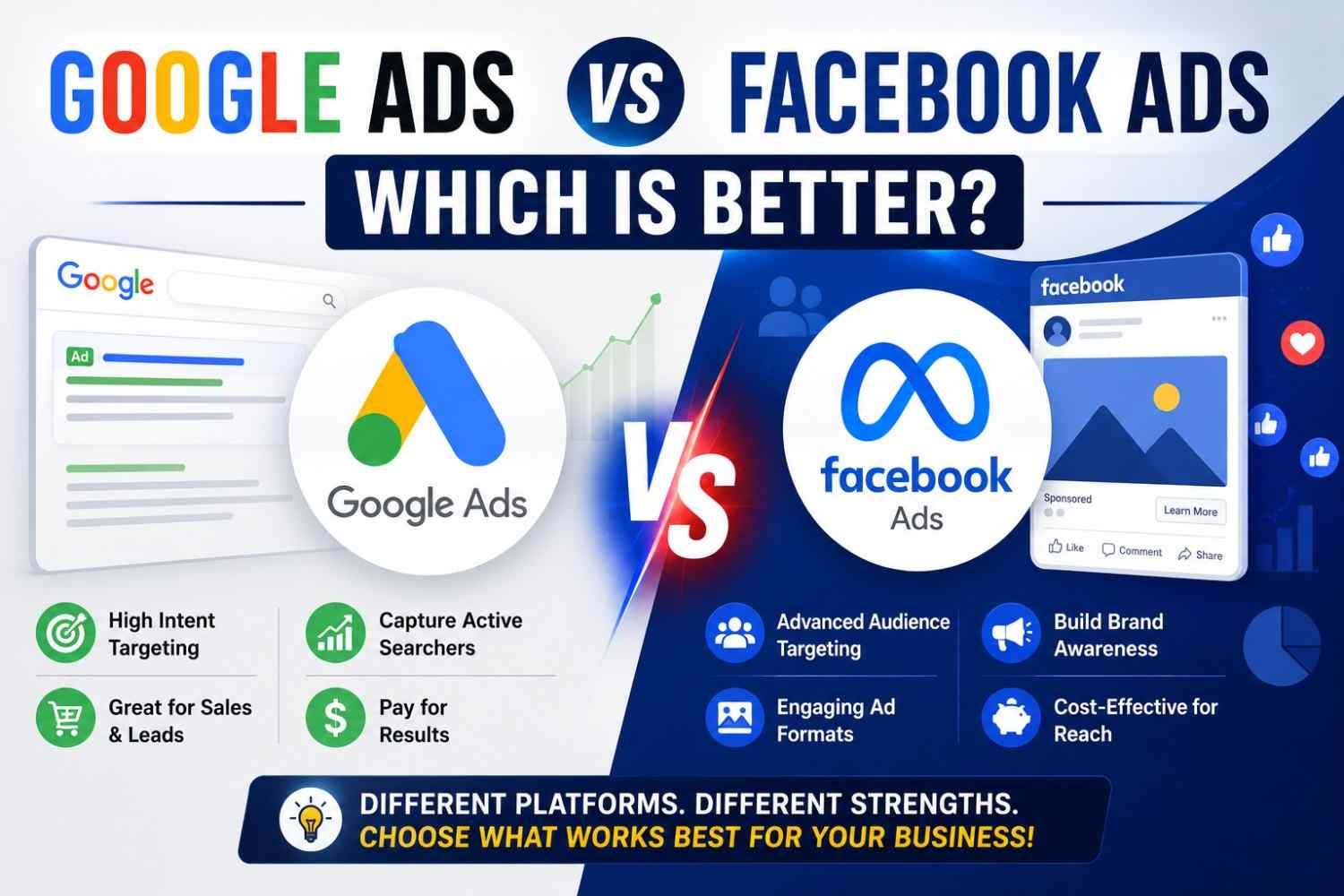
The answer is not really just “pick one”. Google Ads and Meta Ads are both strong advertising ecosystems, but they tend to play different roles and they match up with different stages in the customer journey. If you can understand how each platform operates, what kinds of audience it reaches, and what business objectives it supports, then choosing becomes a lot more sensible. In this guide, we will compare Google Ads vs Meta Ads across several factors, including targeting, cost, conversion possibility, audience behaviour, and return on investment , so you can figure out where your advertising budget should land first.
Why Choosing the Right Advertising Platform Matters
Advertising is kinda an investment, not merely a cost. For every pound you put in, it should, at least in theory contribute toward pulling in leads, raising sales, strengthening brand recognition, or hitting another clear measurable business goal. If you choose the wrong platform , you can end up with weak engagement, worse conversions, and a marketing budget that basically gets spent in a kind of inefficient way. When you understand what each platform does especially well, businesses can shuffle their resources more effectively, and over time improve the campaign results too.
Benefits of Choosing the Right Platform
- Better return on investment.
- Higher-quality leads.
- Improved conversion rates.
- More efficient spending.
- Sustainable business growth.
What Are Google Ads?
Google Ads is basically Google’s online advertising platform, and it lets companies show ads across Google Search, YouTube, Google Maps, Gmail and, millions of partner websites via the Display Network . The biggest benefit is it reaches the right people when they are actively looking for products or services. In other words, businesses can tap into customers that already have buying intent, so it’s less guesswork and more direct connection.
Google Ads Includes
- Search Ads.
- Display Ads.
- Shopping Ads.
- YouTube Ads.
- Performance Max Campaigns.
- Local Ads.
What Are Meta Ads?
Meta Ads cover advertising across Facebook, Instagram, Messenger ,and the Meta Audience Network . Rather than pinning down users only by search intent, Meta leans more into audience interests, demographic details , online behavior, and how people engage. This lets a business put forward products to possible customers even before they’re really getting started with searching.
Meta Advertising Includes
- Facebook Feed Ads.
- Instagram Feed Ads.
- Stories Ads.
- Reels Ads.
- Messenger Ads.
- Carousel Ads.
1. User Intent: Active Search vs Discovery
One of the biggest differences between the two platforms is user intent, a kind of “why” behind the click. Google reaches people who already know what they need and are actively looking for solutions. If someone is searching “best accounting software” or “emergency plumber near me”, they’re often ready to buy, like right now. Meta users, on the other hand, are usually just scrolling through social stuff rather than searching for a specific product. So the successful Meta campaigns don’t exactly wait for intent to appear, instead they kinda create demand, capturing attention first and keeping interest alive before customers start searching elsewhere.
Google Advantages
- High purchase intent.
- Immediate demand.
- Faster conversions.
Meta Advantages
- Product discovery.
- Brand awareness.
- Audience engagement.
2. Audience Targeting Capabilities
Both platforms have powerful targeting options, but they handle targeting a bit different, really not the same way. Google mostly goes after keywords, search behaviour, location, and the whole browsing activity angle, while Meta comes with detailed demographic, behavioural, and interest-based targeting. That combo lets advertisers hit a pretty specific audience, like really quite narrow.
Google Targeting
- Search keywords.
- Geographic targeting.
- Device targeting.
- Audience segments.
Meta Targeting
- Interests.
- Behaviours.
- Demographics.
- Custom audiences.
- Lookalike audiences.
3. Which Platform Generates Better Leads?
Lead quality really hinges on where you’re operating, plus the whole customer journey process. Companies that provide services where the demand shows up right away, like legal services, healthcare, home repairs, or even software, usually end up with stronger lead quality on Google , because people are already searching for answers. On the other hand, Meta tends to shine when you’re launching something new, for example rolling out products, promoting events, building communities, or taking a more extended way to nurture prospects, during a longer buying journey.
Best Uses
- Professional services.
- Emergency services.
- Local businesses.
- High-intent purchases.
Meta
- Lifestyle brands.
- Fashion.
- Fitness.
- Beauty.
- Consumer products.
4. Cost Per Click (CPC)
Advertising costs don’t behave the same way in every field. In Google campaigns, the average cost per click tends to be higher, because advertisers wrestle over search terms that signal real buying intent. Even so, those clicks often do convert in a more direct manner. Meta usually shows lower CPCs, so a business can reach a wider audience with a tighter budget, though the resulting conversions can ask for more patient nurturing, and not always right away.
Consider
- Google = Higher CPC, stronger intent.
- Meta = Lower CPC, broader reach.
5. Brand Awareness Potential
When bringing in a fresh business, product or service, visibility starts to matter a lot, like immediately. Meta does extremely well with brand recognition, mostly because visual materials jus. pull people’s attention, and they do it while reaching folks who maybe never heard of your brand in the first place. Google, by comparison, leans on awareness mainly when users are actually looking around, searching for related subjects, so there’s more intent there.
Meta Strengths
- Visual storytelling.
- Video advertising.
- Community engagement.
- Social sharing.
6. Conversion Potential
Conversions kind of depend on that platform, and also on how ready the customer is. With Google, it usually runs better for businesses who want fast enquiry s or direct purchases, because people are already showing buying intent. Meta on the other hand, often needs several touches before conversion happens, but it works very well when its supported by remarketing campaigns and those follow up signals. Sometimes it feels slower, but it can still land the result.
Conversion Tips
- Match ads with landing pages.
- Improve website speed.
- Use clear calls to action.
- Test multiple creatives.
7. Remarketing Opportunities
Both advertising platforms offer pretty strong remarketing options, though they’re not exactly the same. Google remarketing tends to follow people across websites and YouTube. Meta on the other hand helps businesses reconnect with visitors across Facebook and Instagram, using campaigns that are highly personalised. This kind of retargeting often turns out as one of the top, best performing forms of ads, mainly because the audience already knows your brand, even if they left a while ago.
Remarketing Benefits
- Higher conversion rates.
- Lower acquisition costs.
- Better customer recall.
- Improved ROI.
8. Creative Requirements
Creative quality hits campaign performance in a kind of different way on each platform, so it’s not like it just works the same everywhere. For Google Search Ads , you lean a lot on catchy headlines and persuasive wording, while Meta mostly wants engaging visuals, short form video, and those attention pulling creative assets that stop the scroll. And honestly businesses with solid design capabilities tend to do especially well on Meta, because the whole vibe there is more visual focused.
Creative Focus
- Headlines.
- Keywords.
- Landing pages.
Meta
- Images.
- Videos.
- Stories.
- Reels.
9. Campaign Measurement
Modern ad platforms offer kinda extensive reporting, tools, and such. Companies ought to watch more than just clicks, by looking at things like conversion rates, cost per acquisition, return on ad spend (ROAS), customer lifetime value, plus lead quality.
Track These Metrics
- Click-through rate.
- Conversion rate.
- Cost per acquisition.
- Return on ad spend.
- Customer lifetime value.
10. Which Platform Is Better for Small Businesses?
For a lot of small businesses the answer depend on what budget is on hand and how much customer demand is out there. Like, a company selling things, or services, that people are genuinely hunting for, might want to kick it off with Google first. But if the business is more about awareness, building a local community, or offering consumer products that look really good, then starting on Meta might actually be the better move, for real.
Small Business Recommendations
Start with Google if you:
- Need immediate enquiries.
- Offer local services.
- Have high-intent products.
Start with Meta if you:
- Need brand awareness.
- Sell visually attractive products.
- Build online communities.
Should You Use Both Platforms Together?
The strongest digital marketing tactics usually mix Google Ads with Meta Ads, instead of treating them like rivals, or whatever, competitors. Meta brings in possible customers to your brand with upbeat content and careful audience campaigns. Then, after those people are already interested, and they actively search for your products or services, Google takes that existing demand with search advertising. Businesses can also run remarketing across both platforms, kind of “nudging” them again so the message lands better and conversions go up. When you blend awareness, consideration, and purchase-stage campaigns, you get a fuller marketing funnel and, in the long run , a better return on investment.
Common Mistakes Businesses Should Avoid
A lot of advertisers struggle because they want instant outcomes without testing multiple campaigns, and without optimising performance on a steady basis. Other frequent issues are obvious enough but still happen: targeting audiences too wide, overlooking landing page quality, depending on only one advertisement, forgetting to install conversion tracking, or judging results using clicks alone. Also, don’t just copy competitors strategies, or even copy their ad angles, until you really understand your own customer journey. Continuous experiments, performance reviews, and audience tuning are basically required if you want sustainable advertising wins, not random bursts.
Mistakes to Avoid
- No conversion tracking.
- Poor landing pages.
- Weak creative assets.
- Broad audience targeting.
- Ignoring keyword research.
- Not testing advertisements.
- Unrealistic expectations.
- Inconsistent optimisation.
- Measuring clicks only.
- Stopping campaigns too early.
Best Practices for Maximising Advertising ROI
Successful Paid Advertising campaigns usually start with business goals that are clearly defined, but not just in your head. You have to decide what really matters most, like generating leads, lifting online sales, building awareness, or bringing in local customers. Then, you allocate budgets based on measurable results, not on guesses. It helps to test several creatives and audience segments at once, optimise campaigns on a regular basis, and keep an eye on analytics often. When strong landing pages and persuasive ad copy work together with precise targeting, and you keep tuning things, businesses can maximise returns no matter what platform they pick.
Conclusion
Choosing between Google Ads and Meta Ads is not really about finding some universally better platform—it’s more like choosing the option that fits your business goals, plus how your customers move through the journey. Google Ads tends to do well when people are already looking, because it captures existing demand from users actively searching for products or services, so it’s a solid choice for quick lead generation and high intent purchases. Meta Ads, meanwhile, can be excellent for increasing brand presence, reaching the right audiences, and sparking interest using engaging visual content. For many businesses, the best Digital Marketing approach ends up mixing both platforms, using each one at different phases of the customer journey. If you know your audience, set clear objectives, and continuously optimise campaigns, you can spend your advertising budget more wisely and drive stronger long term growth.
Frequently Asked Questions
1. Which is better for beginners: Google Ads or Meta Ads?
It depends on your goals. Google Ads are often better for businesses targeting customers with immediate purchase intent, while Meta Ads are ideal for brand awareness and audience building.
2. Which platform offers a better return on investment?
Both platforms can deliver excellent ROI when managed correctly. Google often provides stronger results for high-intent searches, while Meta performs well for customer discovery and remarketing.
3. Can small businesses afford Google Ads?
Yes. Small businesses can start with modest daily budgets and scale campaigns gradually as they gather performance data and improve conversions.
4. Should I run Google Ads and Meta Ads together?
Yes. Combining both platforms creates a full-funnel marketing strategy that reaches customers during awareness, consideration, and purchase stages.
5. How do I decide where to spend my advertising budget first?
Evaluate your business objectives, customer behaviour, industry, available budget, and sales cycle. If customers are already searching for your services, start with Google. If you need to create demand and increase brand awareness, begin with Meta.









Leave a Reply