
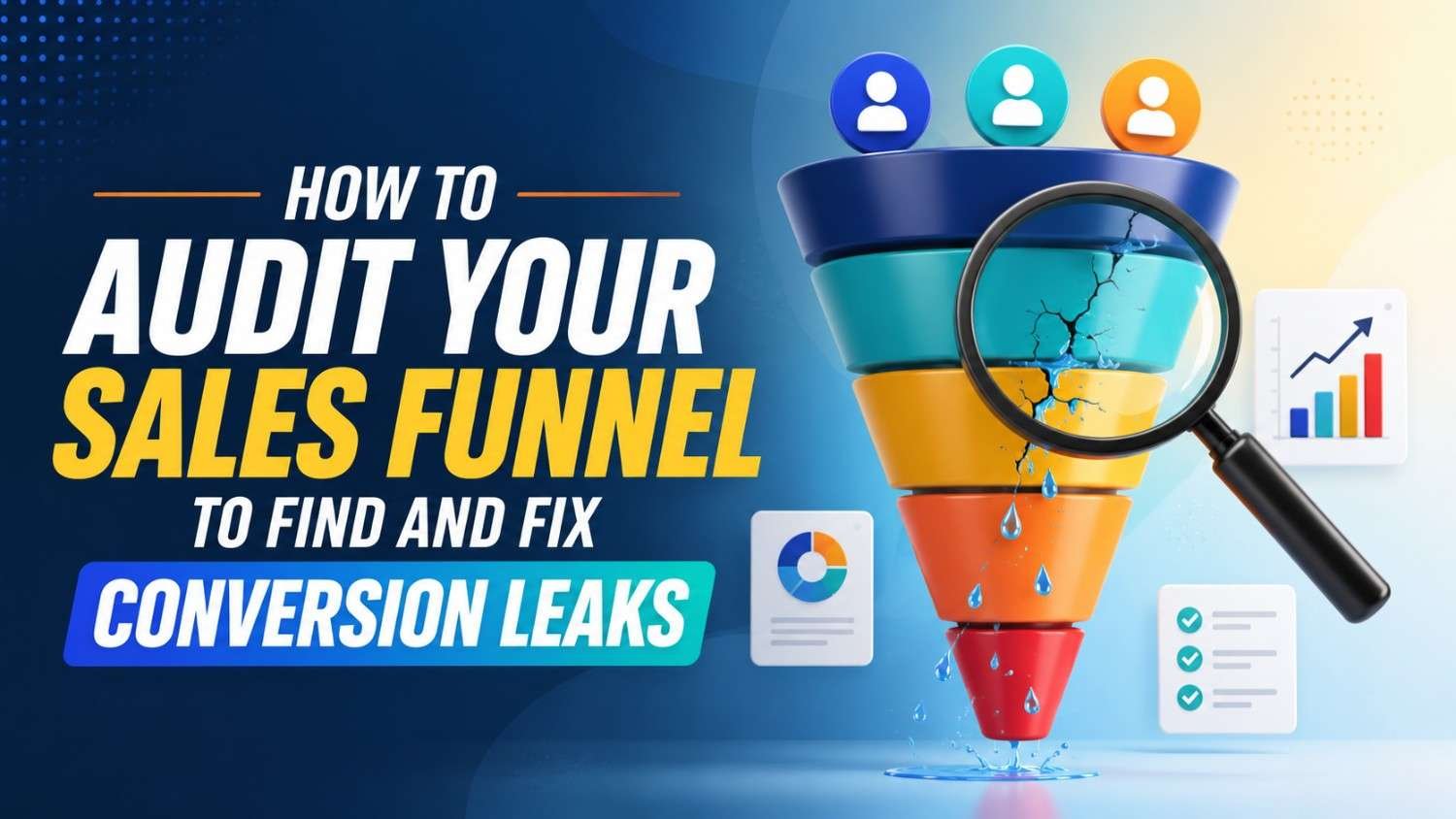
Many businesses spend a lot of time and money trying to pull in website visitors, set up advertising campaigns, and generate leads, yet they still feel stuck when it comes to steady sales growth. Often, the issue isn’t really the lack of traffic, it’s what happens once people enter the funnel. Potential customers might disappear at different points because the messaging is confusing, the site experience is a bit rough, follow ups are slow, or the checkout flow becomes complicated. These less obvious problems, usually called conversion leaks, quietly drain revenue and keep companies from tapping into their real growth capacity.
The good part is that most conversion leaks are not impossible to fix, you can typically find them and correct them using a structured sales funnel audit. When you review each stage of the customer journey, you can spot exactly where prospects fall off, figure out why they leave, and determine what changes will move more of them toward a purchase. Instead of just paying more for fresh traffic, optimizing the funnel you already have often leads to a stronger return on investment. In this guide, you’ll learn how to audit your sales funnel step by step and roll out practical improvements, ones that build better conversion rates and support long term business growth.
What Is a Sales Funnel?
A Sales Funnel kinda describes the path a possible customer travels from the first time they notice your business, to turning into a paying customer, and later on becoming a loyal advocate. Basically, every step matters—like when someone clicks an ad, or when they finally complete the purchase, all of that is part of the overall momentum.
A solid funnel keeps people moving through each stage in a smooth way, by showing the correct details, strengthening credibility, and also clearing out small barriers that block conversions. If one phase starts to perform weakly then the whole customer journey gets dragged down , and you can end up with less revenue even if your traffic stays high.
The typical stages include:
- Awareness
- Interest
- Consideration
- Decision
- Purchase
- Retention
Understanding these stages is the first step toward identifying where customers are leaving your funnel.
Why Auditing Your Sales Funnel Matters
A sales funnel audit kind of helps businesses spot weaknesses that might slip by, unnoticed, ya know. Rather than just guessing why things are not working well, auditing gives real data driven insights into how customers actually behave.
Key benefits include:
- Improved conversion rates.
- Better customer experience.
- Higher marketing return on investment.
- Reduced customer acquisition costs.
- Increased sales efficiency.
- Better alignment between marketing and sales teams.
Regular audits ensure your funnel continues performing effectively as customer expectations and market conditions evolve.
What Are Conversion Leaks?
Conversion Leaks happen any time possible customers, kind of just slip out of the funnel before finishing the thing you wanted. This can occur due to poor messaging , confusing navigation, a lack of trust, pricing worries , technical issues, or simply slow response times. And yes, even tiny leaks can matter a lot , they can seriously drag down total sales results.
For instance, if you improve a landing page conversion rate from 3% to 5% that can create a noticeable revenue jump, even without raising ad spend. So instead of only chasing more traffic all day, businesses should really focus on patching the existing leaks already inside the funnel.
Step 1: Define Your Funnel Stages Clearly
Before auditing begins, document every stage of your sales funnel.
This may include:
- Website visitor
- Landing page visitor
- Lead generation form
- Email nurturing
- Product demonstration
- Sales consultation
- Proposal
- Purchase
- Customer onboarding
Mapping the overall customer journey, sort of makes it easier to see where prospects end up slipping out of the process. Every stage should have well set objectives, and also some measurable performance metrics, not just vague ideas.
Step 2: Analyze Your Traffic Sources
Not all traffic delivers the same quality of leads.
Review where your visitors originate, including:
- Organic search
- Paid advertising
- Social media
- Email campaigns
- Referral websites
- Direct traffic
Don’t just look at visitor counts , compare the conversion rates across each traffic source instead. When you see high volume traffic with weak conversions , that usually means there is something off—like the targeting is not synced right, or the marketing messages are, in a way, a bit mismatched with what people actually expect when they click.
Step 3: Evaluate Landing Page Performance
Your landing pages create the first impression for many potential customers.
Review important factors such as:
- Headline clarity.
- Value proposition.
- Call-to-action visibility.
- Mobile responsiveness.
- Page loading speed.
- Trust signals.
- Visual design.
Small improvements across your landing pages can lead to unexpectedly big gains in lead generation. A visitor should get it fast, they need to grasp what specific issue your business handles and why they should keep going ,and clicking around. In other words, at first sight it must feel clear and kind of obvious, not mysterious.
Step 4: Review Your Lead Capture Process
Complicated forms, they often kind of put off potential customers. Take a minute to see if your lead generation forms ask for extra information that is really not needed. When you request only the essential details, usually completion rates go up and the whole experience feels less “frictiony” so yeah, it works better.
Also examine:
- Form placement.
- CTA wording.
- Privacy assurances.
- Error messages.
- Mobile usability.
Simplifying the lead capture experience encourages more visitors to become qualified leads.
Step 5: Audit Your Customer Journey
The Customer Journey extends beyond the first conversion. Every interaction influences whether prospects continue progressing toward a purchase.
Review:
- Welcome emails.
- Follow-up timing.
- Product education.
- Customer support.
- Demo scheduling.
- Sales communication.
- Purchase experience.
Consistency across these touchpoints builds trust and increases conversion opportunities. Customers should never feel uncertain about the next step in the buying process.
Step 6: Measure Key Conversion Rate Optimization Metrics
Effective audits rely on measurable performance indicators rather than assumptions.
Monitor metrics including:
- Landing page conversion rate.
- Email open rate.
- Click-through rate.
- Sales qualified leads.
- Customer acquisition cost.
- Cart abandonment rate.
- Demo attendance rate.
- Sales close rate.
- Customer retention.
Tracking these numbers regularly helps identify declining performance before it becomes a larger problem. Data-driven decisions consistently outperform guesswork.
Step 7: Identify Technical Issues
Sometimes conversion leaks have technical rather than marketing causes.
Inspect your funnel for:
- Slow website loading.
- Broken links.
- Form submission errors.
- Checkout failures.
- Mobile usability problems.
- Browser compatibility issues.
Technical problems create frustration and encourage visitors to leave before converting. Routine website maintenance should remain part of every funnel optimization strategy.
Step 8: Improve Lead Generation Quality
Generating more leads isn’t always the answer. Focus on attracting qualified prospects who genuinely need your solution.
Improve lead quality by:
- Refining audience targeting.
- Creating valuable content.
- Using clear messaging.
- Segmenting marketing campaigns.
- Offering relevant lead magnets.
Higher-quality leads convert more consistently while reducing unnecessary sales effort.
Step 9: Strengthen Trust Throughout the Funnel
Trust significantly influences purchasing decisions.
Increase credibility through:
- Customer testimonials.
- Case studies.
- Industry certifications.
- Security badges.
- Transparent pricing.
- Product guarantees.
- Expert content.
Companies that show real know how and clear behavior usually end up with better conversion results than rivals who only push discounts or promo talk. Earning that confidence is not something you just do once, it should keep going, kind of a steady thing.
Step 10: Test, Measure, and Optimize Continuously
Successful funnels are never truly finished. Customer expectations, competitors, and digital marketing platforms constantly evolve.
Implement regular A/B testing for:
- Headlines.
- CTAs.
- Images.
- Pricing pages.
- Email campaigns.
- Landing page layouts.
- Checkout processes.
Continuous experimentation helps businesses find small improvements that actually lead to measurable revenue growth over time, but it also makes the whole process feel less random and more tuned. In other words, optimization shouldn’t stay as some occasional project you do once in a while, it should become part of your day to day marketing strategy, steady and ongoing.
Common Sales Funnel Mistakes
Many organizations unknowingly create conversion leaks through avoidable mistakes.
Common issues include:
- Weak value propositions.
- Too many form fields.
- Slow sales follow-up.
- Inconsistent messaging.
- Poor mobile experiences.
- Complicated checkout processes.
- Ignoring customer feedback.
- Lack of analytics tracking.
Recognizing these challenges early prevents unnecessary revenue loss.
Best Practices for a Successful Sales Funnel Audit
An effective Sales Funnel Audit sort of blends customer insights with dependable analytics. Businesses really should document each funnel stage, keep an eye on performance on a regular basis, lean into user experience, work with other departments, and revisit customer feedback more often than usual. If you build dashboards that track key performance indicators it becomes way easier to spot shifts fast and then respond using informed decisions, not guesswork. Organizations that audit and tweak their funnels on a consistent basis tend to form stronger customer relationships while also maximizing marketing investments, in a pretty measurable way.
Future of Funnel Optimization with AI
Artificial Intelligence is changing how businesses read customer behavior in practice. AI powered tools can forecast conversion likelihood, surface drop off trends, tailor customer experiences, automate lead scoring, and suggest optimization chances from live behavioral data. As AI continues improving businesses will probably reach deeper clarity about customer intent, so sales funnels can become more customized and efficient. Teams that combine human judgment with AI driven analytics should see better conversion rates over the next few years.
Conclusion
A good business doesn’t just create more visitors it makes more of those same visitors actually take action. Doing a careful Sales Funnel, Conversion Rate Optimization, Lead Generation, Customer Journey, and Sales Funnel Audit sort of work like, it shows where the silent drop-offs are, the sneaky conversion leaks, then it helps tighten the full customer experience and squeezes more value out of marketing spend. When you review every step of the funnel regularly, remove the friction spots, strengthen credibility, and rely on numbers instead of guesses, companies can lift conversions, raise customer happiness, and build stable long-term growth.
Frequently Asked Questions
1. What is a sales funnel audit?
A sales funnel audit is a detailed review of every stage in the customer journey to identify where prospects drop off and discover opportunities to improve conversion rates.
2. How often should I audit my sales funnel?
Most businesses benefit from performing a comprehensive audit every quarter while monitoring key performance metrics monthly to identify issues before they impact revenue.
3. What causes conversion leaks?
Common causes include poor landing pages, confusing navigation, slow follow-up, technical errors, weak messaging, lack of trust signals, and complicated checkout or lead capture processes.
4. Which metrics are most important during a funnel audit?
Focus on conversion rate, bounce rate, click-through rate, lead quality, customer acquisition cost, cart abandonment, sales close rate, and customer retention to evaluate funnel performance.
5. Can AI improve sales funnel optimization?
Yes. AI can analyze customer behavior, predict purchase intent, automate lead scoring, personalize user experiences, and identify optimization opportunities that help businesses improve conversions more efficiently.



Leave a Reply