
Growing a B2B business today feels harder than it used to, and honestly, it’s kinda nonstop. Buyers are more informed than ever, competition keeps getting tighter, and the usual sales motion tends to stretch into those long decision cycles. A lot of companies end up spending heavily on marketing campaigns and bigger, newer sales teams yet somehow they still can’t pull in customers in a clean, efficient way. Meanwhile modern buyers often want to explore the product by themselves, first, before they ever talk with someone from sales. Because of that, the conventional growth playbook just doesn’t hit the same way in this digital-first world.
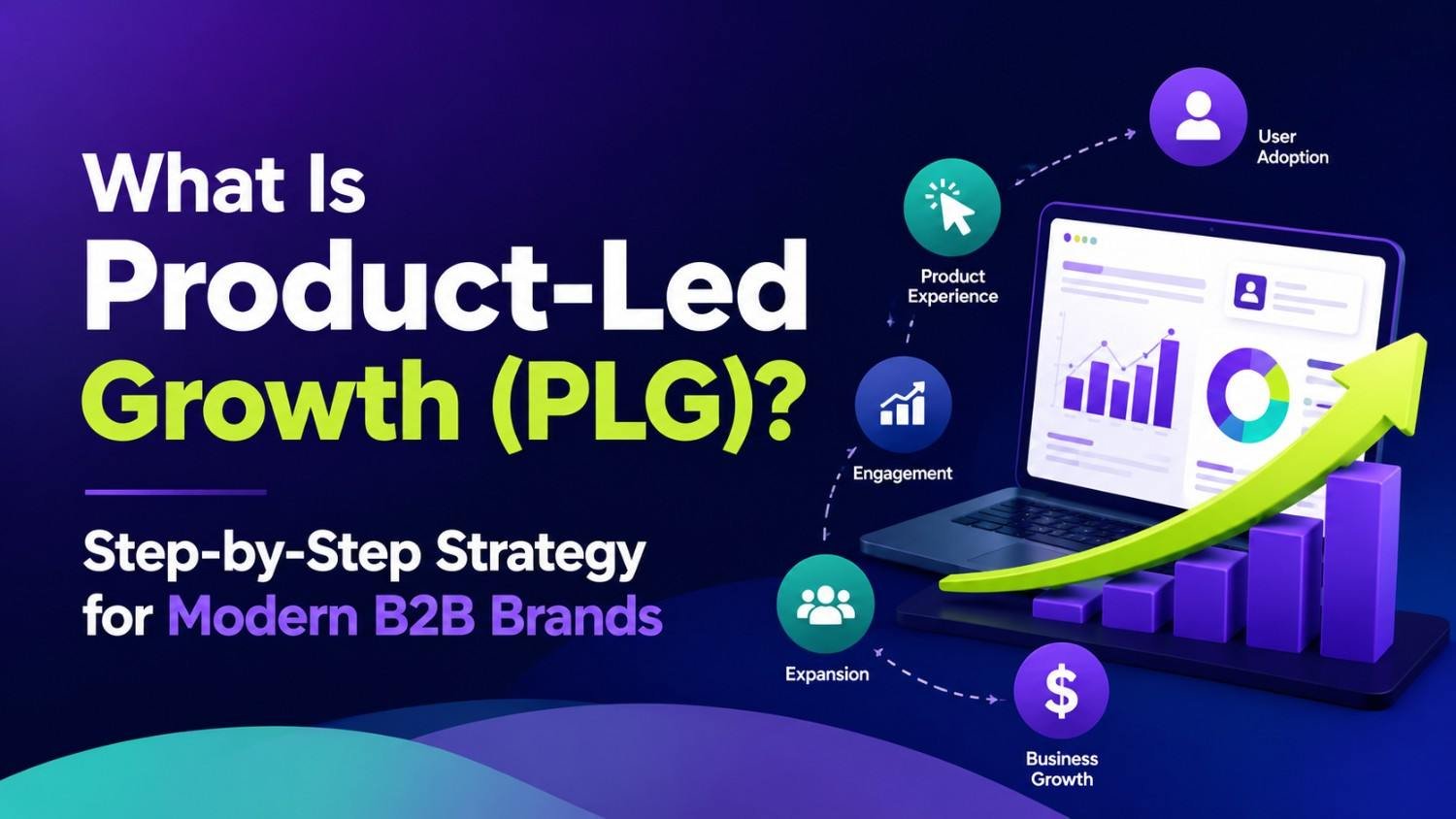
That’s why Product-Led Growth, or PLG, has become such a big deal. In PLG, the product becomes the main engine for customer acquisition, activation, expansion, and retention. Instead of depending only on sales reps or big marketing pushes, businesses let users see the value directly , right away, through free trials, freemium tiers, or hands-on interactive demos. When people recognize tangible benefits fast, they’re far more likely to move into paid plans and stay around as loyal customers, and even turn into advocates over time. This guide goes over how Product-Led Growth works, what’s making it reshape B2B companies, and exactly how your business can roll out a PLG strategy that actually sticks.
What Is Product-Led Growth (PLG)?
Product-Led Growth (PLG) is kinda like a business approach where the product turns into the main driver for getting new customers, converting them, and keeping them around longer. Instead of leaning mostly on outbound sales, or running costly advertising campaigns, PLG helps people discover the product, actually feel the value in it, and decide to buy based on that hands-on experience, not on a pitch. When companies go with PLG, they often offer free trials, a freemium setup, or self service onboarding. That makes it easy for prospects to start using the product right away, and not wait for anything. Then, as users reach real and meaningful results, they tend to move on naturally toward paid subscriptions, or upgraded premium capabilities.
Key characteristics of Product-Led Growth include:
- Self-service product adoption.
- Fast onboarding experiences.
- Free trials or freemium plans.
- User-driven expansion.
- Continuous product improvement using customer feedback.
Why Product-Led Growth Is Becoming Essential for Modern B2B Brands
Today’s B2B buyers kind of like to look around and figure things out on their own before they talk to a sales team. They want fast access, clear pricing, and the option to test software, without having to line up, a bunch of meetings and repeated demos. PLG fits these expectations really well, because it cuts down the whole friction part, across the buying journey. Instead of trying to persuade prospects using polished presentations, companies let the product make its own case, and show value in a more direct way.
Major advantages include:
- Faster customer acquisition.
- Lower customer acquisition costs.
- Higher user engagement.
- Better customer retention.
- Scalable growth opportunities.
As digital transformation accelerates, businesses that embrace self-service experiences often gain a competitive advantage.
Traditional Sales-Led Growth vs. Product-Led Growth
| Feature | Traditional Sales-Led Growth | Product-Led Growth |
| Primary Driver | Sales Team | Product Experience |
| Customer Acquisition | Sales Outreach | Self-Service |
| Product Access | After Sales Contact | Immediate Access |
| Buying Process | Longer | Faster |
| Customer Education | Sales Demonstrations | Interactive Product |
| Scalability | Limited by Sales Capacity | Highly Scalable |
While both approaches remain valuable, many organizations now combine Product-Led Growth with sales-assisted strategies for enterprise customers.
Core Principles of Product-Led Growth
Deliver Immediate Value
In the first few minutes of using the product, users decide, pretty much right away, if they stick around and keep exploring. Customers should get the gist fast—like how the solution actually fits their problems—without having to do a ton of training or “learning on the job”. Simple onboarding, more natural interfaces, and guided product tours tend to shape better first impressions, even when someone is still figuring things out.
Focus on User Experience
A strong product experience makes it easier for people to stay engaged. Each interaction should chip away at the difficulty, while also helping customers complete real, meaningful tasks. Smooth navigation, practical tutorials, responsive design , and quick performance all work together, it is a kind of chain reaction. When these parts feel right, product adoption usually follows.
Let Data Drive Decisions
The best PLG companies don’t just guess and move on. They continuously study user behavior and what actually happens after someone signs in. They track onboarding completion, feature usage, engagement levels, and customer retention so they can spot gaps and better opportunities. With ongoing optimization, the product keeps moving in step with actual customer needs, not just with assumptions made in meetings.
Step-by-Step PLG Strategy for Modern B2B Brands
Step 1: Understand Your Target Audience
Every successful Product-Led Growth strategy starts with getting a real sense of customer pain points, and like not the shallow kind of understanding. Do market research, interview actual customers, and comb through behavioral data. You do that to spot the real challenges your product helps with, even if they’re not obvious at first. Also, building detailed buyer personas, yes those, lets you sort out which features should come first, the ones that bring fast value in practice.
Step 2: Build an Outstanding Onboarding Experience
User onboarding should remove confusion and help new customers experience success as quickly as possible.
Effective onboarding typically includes:
- Welcome tutorials.
- Interactive product walkthroughs.
- Progress checklists.
- Contextual tips.
- Quick-win tasks.
A positive onboarding experience increases activation rates and encourages continued product usage.
Step 3: Offer a Free Trial or Freemium Plan
Letting people try the product first , before they pay, it kind of lowers the risk and it also builds trust. A free trial should include enough useful functionality so customers can get a feel for what the product does and why it matters, while also gently nudging them toward upgrades for the more advanced features.
Step 4: Identify Activation Metrics
Activation occurs when users experience the product’s core value.
Examples include:
- Completing the first project.
- Inviting teammates.
- Uploading data.
- Generating reports.
- Automating a workflow.
Tracking activation helps businesses optimize onboarding and increase conversion rates.
Step 5: Encourage Product Adoption
Customer success doesn’t just stop after signup, it kind of keeps going. Organizations should keep educating users with webinars, fresh product updates, a knowledge base, tutorials and in-app guidance, so people actually try more features and use them in a wider way.
Step 6 Use Customer Feedback
You can gather feedback via surveys, support conversations, plus product analytics, and that helps spot where things can be better. When teams listen carefully it builds trust, and it also steers what comes next in product development.
Step 7 Optimize Conversion Paths
After users start noticing the real value, upgrading should feel easy , almost natural. Having clear pricing, straightforward feature comparisons, customized upgrade suggestions, and a smooth payment flow all help lift conversion rates, and yeah it feels less pushy.
Essential Metrics for B2B Growth
Measuring performance is critical for every Product-Led Growth strategy.
Important metrics include:
- Product Activation Rate.
- Customer Acquisition Cost (CAC).
- Monthly Active Users (MAU).
- Daily Active Users (DAU).
- Feature Adoption Rate.
- Customer Lifetime Value (CLV).
- Churn Rate.
- Net Revenue Retention (NRR).
- Trial-to-Paid Conversion Rate.
- Expansion Revenue.
Regular monitoring allows businesses to identify strengths, weaknesses, and growth opportunities.
Best Practices for Successful Customer Onboarding
Strong onboarding helps people feel confident faster and they get the product idea quicker, not just by reading, but kind of by doing. Organizations really should tune onboarding to fit customer roles, how big the company is, and what the industry actually asks for. Things like progress tracking , small milestone celebrations , helpful educational resources, and customer support that actually answers promptly all add up to better engagement. The more easily customers find their path to success, the more likely they are to turn into loyal advocates.
Common Challenges of Product-Led Growth
Even if PLG brings big benefits, rolling it out is never fully effortless. A lot of organizations have trouble keeping free and premium features balanced , staying ruthless about product simplicity while they still expand functionality, tracking user behavior in a way that is accurate enough, and then supporting enterprise customers who have extra, sometimes complicated requirements. Also, it’s important to not assume that Product-Led Growth means you can skip sales altogether. Enterprise buyers often still want guidance, help with procurement, and more tailored solutions. The best companies end up mixing self-serve, product-led moments with smart sales backing when it matters most.
How AI Is Enhancing User Experience
Artificial Intelligence is helping Product-Led Growth work even more effectively . In practice AI makes onboarding smoother, with customized tutorial flows, suggesting relevant features, spotting what a user is trying to do, and handling repetitive questions via smarter chatbots for support. On top of that, predictive analytics let teams spot which users are likely to upgrade soon or who might need extra help. When companies blend AI with Product-Led Growth, they end up with more tailored experiences, which tends to lift customer satisfaction and also trims down operational costs.
Future of Product-Led Growth
Since digital purchasing habits keep changing, Product-Led Growth should matter more and more especially for B2B organizations. Teams will probably lean into AI personalization again and again, plus automated onboarding, product analytics, usage-linked pricing , and customer success automation. Companies that can deliver value right away through high quality product experiences will be placed better for long term growth. And instead of replacing marketing or sales, Product-Led Growth builds tighter connection across essentially every customer-facing area, like a kind of shared roadmap.
Conclusion
Modern B2B buyers kind of expect to feel the value, before they ever commit to a purchase. So Product-Led Growth , PLG strategy, Customer onboarding, B2B growth, and the user experience have become kinda essential parts of durable business success. When organizations design onboarding that feels intuitive, deliver value right away, track customer behavior, and keep refining the product over time, they usually attract new customers faster, hold on to them longer, and end up with growth that scales over the long run. In today’s competitive software world, the product itself is now, arguably one of the strongest marketing and sales tools out there.
Frequently Asked Questions
1. What is Product-Led Growth (PLG)?
Product-Led Growth is a business strategy where the product becomes the primary driver of customer acquisition, conversion, expansion, and retention through self-service experiences.
2. Which companies benefit most from Product-Led Growth?
PLG works particularly well for SaaS businesses, cloud platforms, productivity tools, collaboration software, and other digital products that customers can explore independently.
3. Does Product-Led Growth replace sales teams?
No. Many businesses combine Product-Led Growth with sales-assisted strategies, especially for enterprise customers requiring customized solutions and procurement support.
4. What are the most important PLG metrics?
Key metrics include activation rate, trial-to-paid conversion, customer acquisition cost, feature adoption, churn rate, monthly active users, and customer lifetime value.
5. How does AI support Product-Led Growth?
AI improves personalization, automates onboarding, recommends relevant features, predicts customer behavior, enhances support, and helps businesses optimize the overall product experience.


Leave a Reply