
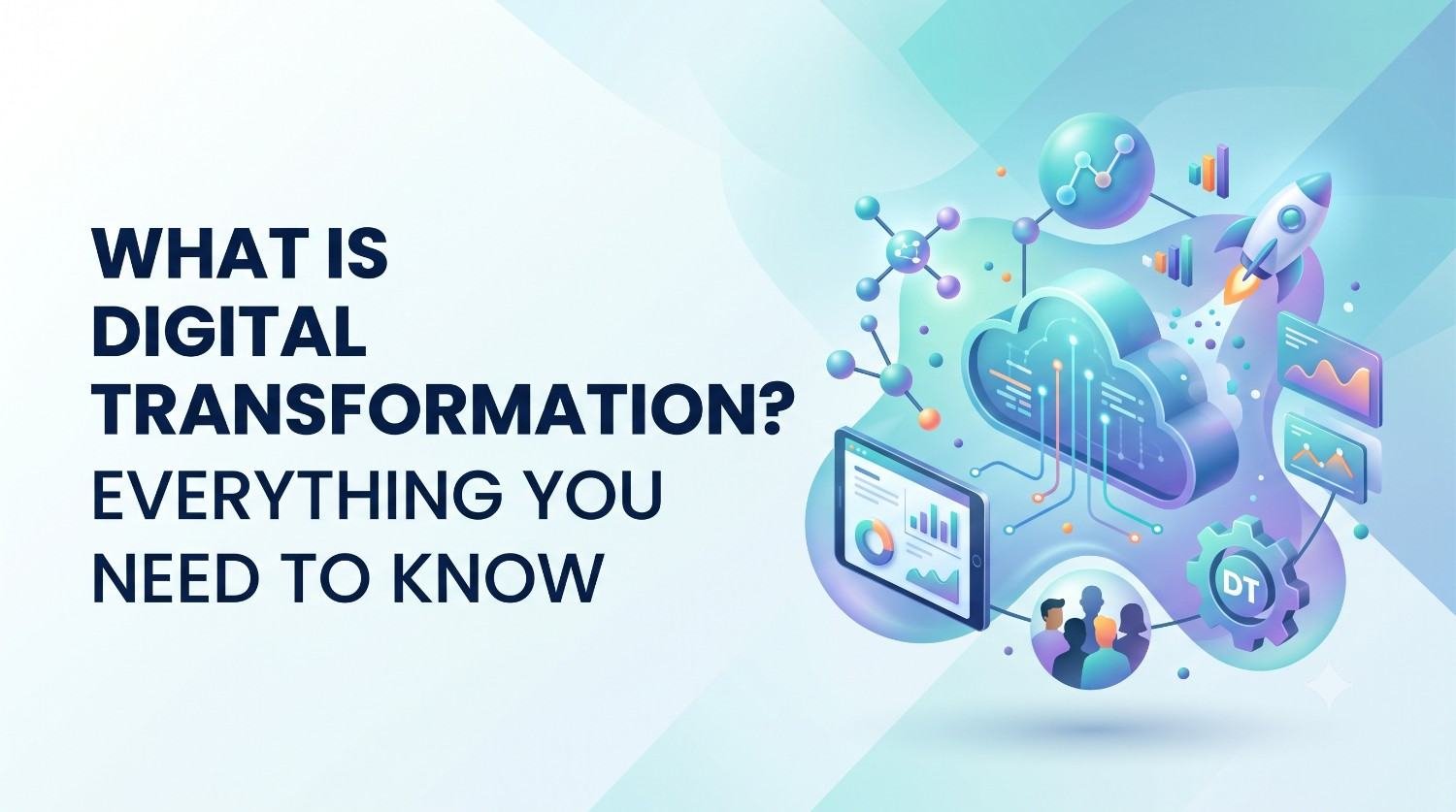
Running a company today means dealing with shifts in what people want, new tech, strong rivals, and changing market rules. These shifts can hit faster than older routines can respond. Even if a firm has good products and skilled staff, it can still stall. Common reasons are clunky systems, information locked inside separate teams, customers now expecting quicker online help, and competitors using automation and AI in a smoother way. Buying yet another tool usually does not fix the root issue. The main task is to figure out how tech can change daily work, improve service, support better choices, and create more value.
This is why digital transformation matters. It is not just uploading files to the cloud, building an app for a phone, or swapping paper for scanned forms. Real work often means looking again at how things run, what tech is used, how people think and act at work, what customers feel, and sometimes how the business makes money in the first place. Google Cloud frames it as using up-to-date digital tools to shape business processes, culture, and customer experiences when the market and business world changes. McKinsey talks about it as a deep change in how an organization operates, so tech can be rolled out often and value can be built over time.
What Is Digital Transformation?
In plain terms, digital transformation is the use of digital tools to improve how an organization operates and delivers value. It links technology with business plans, the people involved, day-to-day processes, available data, and what customers need. When a company starts this effort, it may redo a weak workflow, shift apps to the cloud, bring in AI for customer support, and automate repeated tasks. connect previously isolated databases, modernize its website, or develop an entirely new digital product. Technology is important, but the desired business outcome comes first.
IBM describes digital transformation as a business strategy that incorporates digital technology across an organization while modernizing processes, products, operations, and technology to support continuous, customer-driven innovation.
In practical terms, transformation can involve:
- Modernizing legacy systems.
- Automating repetitive processes.
- Improving customer experiences.
- Connecting business data.
- Using AI and analytics.
- Moving appropriate workloads to cloud platforms.
- Strengthening cybersecurity.
- Creating digital products and services.
- Changing how employees collaborate.
Digital Transformation Is More Than Technology
One of the biggest misconceptions is that business digital transformation is simply an IT upgrade. Buying new software does not automatically transform a business. Imagine replacing an old paper-based approval process with a digital form while keeping exactly the same unnecessary approvals. You have digitized the process, but you have not fundamentally improved it. Transformation would involve examining why those approvals exist, removing unnecessary steps, automating appropriate decisions, connecting the workflow to other systems, and measuring whether the redesigned process produces better results.
This distinction matters because successful transformation changes the way the organization operates. AWS describes digital transformation as integrating digital technologies across business areas in ways that fundamentally change operating processes and improve productivity.
Digitization vs. Digitalization vs. Digital Transformation
These three terms are often used interchangeably, but they describe different levels of change.
| Concept | Simple Meaning | Example |
| Digitization | Converting something from physical to digital | Scanning paper records |
| Digitalization | Using digital tools to improve an existing process | Using software to automate approvals |
| Digital transformation | Redesigning how the business creates and delivers value | Building a data-driven, automated customer service model |
Digitization usually comes first. It focuses on turning analog work into digital form. Digitalization then takes what already exists and makes it run better. Digital transformation is different. It pushes teams to ask if the workflow should be redone, if the customer journey needs a new shape, if the way the company operates must change, or if the revenue model should be updated. When you see this gap, you can avoid calling every new tool a transformation effort.
Why does digital transformation matter?
It matters because markets shift fast. People want smoother online experiences. Staff also expect tools that work together. At the same time, companies face more data and still must react quickly when conditions change.
New tech can support speed and efficiency. It can also help with smarter choices by using stronger data. It can lower steps that slow people down. It may even help teams build new offerings. Google Cloud points to gains like updating infrastructure, better handling of data, clearer views from analytics, fewer silos, help with business issues, and ways to cut costs.
The business case usually becomes stronger when technology is connected to measurable outcomes such as:
- Faster service delivery.
- Lower operational costs.
- Higher productivity.
- Better customer satisfaction.
- Faster decision-making.
- Improved resilience.
- New revenue opportunities.
The goal should never be “becoming more digital” for its own sake. The goal is creating a better business.
The Current State of Digital Transformation in 2026
The size of tech spending helps explain why companies still rank change efforts as a top goal. Gartner expects global IT spend to hit $6.37 trillion in 2026. That would be 14.2% higher than 2025. Gartner also points to AI infrastructure, cloud tools, and smarter apps as key reasons for the lift.
IDC adds another view. It says spending for digital transformation software is moving toward $640 billion by 2029. In its view, software is becoming a big force behind transformation. It also notes that AI budgets are shifting toward what users will actually run, meaning more focus on applications. India fits the same pattern. Gartner projects public cloud costs in India at about $17.5 billion in 2026. This is 28.1% up from 2025. It links that growth to AI-ready infrastructure, updates to older apps, and digital services that more people can use. These numbers suggest change work is not only an IT team topic anymore. It is starting to show up as a broader business plan.
Key Technologies Driving Digital Transformation
Not every tool helps with the same issue. Tech enables many change projects, yet each type does a different job. The best efforts often use several technologies together. They do not depend on just one new trend.
Cloud Computing
Cloud computing and digital change sit side by side. Cloud services can scale compute, storage, and databases. They also include analytics tools, app platforms, and teamwork features.
With cloud, a company does not need to run every workload on its own servers. Teams can move capacity up or down as needed. That usually makes trials and growth easier. Still, moving to the cloud is not the same thing as digital transformation. Many transformation efforts include cloud migration and modernization, and AWS calls those out as major parts.
AI and Machine Learning
AI is now a key technology for digital transformation. It can automate tasks, make forecasts, and tailor experiences. It can also help with search and knowledge use, support customer service, create content, and assist decisions. Generative AI can help staff look up details and draft business materials. Agentic AI can carry out set steps, as long as controls and limits are in place. AWS groups both generative and agentic AI as parts of modern transformation work.
Even so, AI has to solve a real need. If the data is not dependable, or if there is no governance, security plan, or defined use case, the result can be extra work. It may add trouble instead of value.
Data Analytics
Most digital transformation work depends on data. Organizations need solid information to learn about customers, day to day operations, risks, and results.
Better analytics can reveal trends that are hard to spot by hand. A store might study buying habits to plan stock. A factory might review operations data to spot equipment issues early, before they lead to shutdowns. The tools matter. But clean, accurate data matters more.
Automation
Automation helps cut down on repeated tasks that people have been doing by hand. It can be as basic as routing a form, or as advanced as using models to assist with decisions.
You might see it in invoice intake, new customer setup, booking, status updates, sorting files, and handling common service requests. The strongest candidates for automation are often the ones that repeat often, follow clear rules, take a lot of time, and can be tracked with simple measures.
Cybersecurity
When companies move deeper into online systems, security has to be built into change efforts, not added later.
Transformation work should start with identity checks, user access limits, encryption, system watching, safer software practices, data rules, and laws that apply to the business. A business can move quickly and still fail if it cannot keep customer and company data safe.
Digital Transformation and Customer Experience
People now judge firms by how easy and smooth the overall experience feels. A customer usually does not care what tools sit behind the scenes. They care that the site loads, the details are right, help is quick to respond, checkout is not confusing, and issues are fixed fast. For that reason, improving customer experience belongs in the broader plan.
Businesses can use digital tools to provide:
- Personalized recommendations.
- Faster customer support.
- Self-service portals.
- Mobile experiences.
- Real-time notifications.
- Omnichannel communication.
- Faster payments and transactions.
The technology should remain largely invisible to the customer. What they notice is a better experience.
Digital Transformation and Employees
Transformation changes daily work, too. New tools can cut out repeat chores. They can also make it easier for teams to work together and share updates. Staff may find key details faster, which helps when deadlines hit. Work models like remote and hybrid often benefit as well. Even so, rolling out tech can backfire when people are not ready. Some workers push back because they do not see the reason for the change. Others worry about what will shift in their role. A few simply want clear steps for what they should do next.
That is where change management comes in. Teams need clear messages. They need hands-on training. Managers should stay involved and visible. Employees also need chances to speak up, ask questions, and share concerns. Transformation only works when people can actually use the tools in their jobs. Buying tech is not the finish line.
What is Digital Transformation Strategy
A digital transformation strategy lays out the plan that links tech spending to business goals. It sets out what the company aims to change and why. It also lists the skills and systems that are needed. Finally, it shows how the team will judge progress. A solid plan starts with the problems the business faces. It should not start with what the market is buzzing about.
For instance, a firm might not lead with “We need AI.” It could first spot an issue, like customer support reps spending too much time on the same type of questions. Then the team can test AI as one option to tackle that issue.
A strong strategy typically considers:
- Business priorities.
- Customer needs.
- Current technology.
- Data quality.
- Process weaknesses.
- Workforce capabilities.
- Security and compliance.
- Investment requirements.
- Expected business outcomes.
How to Start a Digital Transformation Program
Starting small can be more effective than attempting to transform the entire organization simultaneously. Begin by identifying high-impact problems. Map the existing process, understand where delays and costs occur, gather employee and customer feedback, and establish measurable baseline performance. Then prioritize opportunities according to potential value, complexity, risk, and readiness.
A practical sequence might look like this:
- Define business objectives.
- Audit existing processes and systems.
- Identify transformation opportunities.
- Prioritize high-value use cases.
- Build a roadmap.
- Launch controlled pilot projects.
- Measure results.
- Scale successful initiatives.
- Continuously improve.
This approach turns transformation into a portfolio of measurable improvements rather than one enormous project.
The Role of Legacy Systems
Old systems can slow down enterprise change. Many of them hold key business rules and data that teams rely on. Still, keeping them running can cost a lot. They can also be hard to plug into newer apps. You do not always have to swap everything out. Some groups choose a slower path. They link old apps to new ones with APIs. They move only certain workloads. They also drop tools that no longer add value.
What to do next depends on several things. How important the system is to the business matters. So do tech limits, total cost, and risk. Long term plans also play a role. This work is not just about using fresh tools. The goal is to use tools that fit the business needs.
The Role of APIs and Integration
Companies often end up with apps made or bought in different years. When those tools do not talk to each other, people move data by hand. That wastes time and can lead to mistakes. With APIs and integration platforms, systems can share data in a smoother way.
For instance, an organization can link a CRM to an order management system. Then sales teams can see current customers and purchase details without jumping between separate steps. That is why integration matters. New customer experiences usually rely on more than one system working at the same time.
Digital Transformation in Different Industries
Transformation can look one way in one field and something else in another. Healthcare teams might use digital tools for appointment booking, messages to patients, electronic charts, reporting, and remote care. Banks often start with mobile apps, online transfers, tools that spot fraud, workflow automation, and services that fit each customer.
Retail leaders may put time into online shopping, product suggestions, clearer stock counts, customer insights, and online plus store buying together. Factories can lean on sensors, data analysis, automation systems, digital twins, and maintenance plans that warn ahead of time. Even with different tools and setups, the core idea stays steady. Find a real business or customer issue, then use digital support to make the result better.
Common examples of digital transformation
One company may change customer support by moving away from long email threads and toward one service system, a shared help guide, auto routing, and support that uses AI help. Another firm may link machines to sensors and analytics so it can track how things run and plan maintenance earlier.
A retailer might tie online pages with physical stores. That can let people view items, see what is in stock, place an order, and choose delivery or pickup. A services business may gather its files in one place, automate approval steps, use AI search for past answers, and offer a client portal. These cases also show that digital transformation is not only for tech firms. Many organizations can spot work steps where digital tools can bring real, measurable gains.
The Biggest Challenges of Digital Transformation
Transformation can deliver significant benefits, but it is not guaranteed to succeed. Gartner reported that only 48% of digital initiatives globally meet or exceed their business outcome targets, based on its 2024 survey of more than 3,100 CIOs and technology executives and more than 1,100 executives outside IT.
Common challenges include:
- Unclear business objectives.
- Resistance to change.
- Poor-quality data.
- Legacy technology.
- Skills shortages.
- Weak leadership alignment.
- Security risks.
- Integration problems.
- Uncontrolled costs.
- Difficulty measuring ROI.
This is why buying technology should never be confused with achieving transformation.
How to Measure Digital Transformation Success
Good digital transformation goals link to real business results. Don’t focus only on how many people sign into a new system. Check if anything important got better. Did customer wait time drop? Did your processing costs move down? Did conversion rates rise? Are employees spending less time on repeated tasks?
Useful measurements can include:
| Business Area | Possible KPI |
| Customer experience | Satisfaction score, retention, response time |
| Operations | Processing time, error rate, productivity |
| Sales | Conversion rate, revenue per customer |
| Finance | Cost reduction, transaction efficiency |
| Employees | Adoption, productivity, training completion |
| Technology | System availability, deployment speed |
| Security | Incidents, detection time, compliance |
Measurement should begin before implementation so you have a baseline for comparison.
The Importance of Leadership
Tech teams cannot do a full transformation by themselves. Leaders in the business side must be clear on goals, put money and people behind the work, clear out internal roadblocks, and track results. Without that, delivery stalls. Gartner points to a clear split. In its Digital Vanguard group, 71% of digital efforts hit or beat the business targets. In the overall set, the number was 48%. Gartner says the gap shows up because CIOs and business executives share ownership of digital delivery.
So the core idea stays the same. Transformation belongs to the business. Technology helps make it happen, but it is not just an IT task passed to another team.
Digital Transformation and AI in 2026
AI is changing how fast transformation moves and what it means. Gartner expects global spend on AI models and platforms to reach 64 billion dollars in 2026. That is a rise of 63.4% from 2025. It also expects generative AI model spending to jump 117%.
More tools bring more chances to win, but they also raise the bar. Companies now need to prepare data for AI, set rules for models, handle security, plan how to judge results, manage cost, and help staff use new systems. Instead of only asking, “How can we use AI?”, teams should ask, “What can AI improve with clear results, and still keep the right level of control?”
The Future of Digital Transformation
More connected systems will show up more often. Teams will use AI to run workflows. Apps will respond in smarter ways. Cloud and mixed setups will keep growing. Businesses will lean on analytics that update fast. Tasks will be automated. Customer experiences will feel more tailored. Still, the core idea is easy to say: companies must keep adjusting.
McKinsey frames transformation as a steady path, not a single job. It stresses that firms should keep putting tech into practice at scale. The goal is better customer experience and lower costs. This also means building a loop where people can try ideas, check results, learn from what happens, and then expand what works. It is not just finishing a plan and calling it done.
Conclusion
Digital transformation is about how value gets made in a company. It depends on technology, but it also depends on process work. It needs better data. It needs people who can do the job well. It needs customer focus. It needs room for ongoing improvement. Cloud, AI, analytics, automation, security, new apps, and joined up systems can all play a role. Yet tech by itself is never the goal.
The better transformation efforts start with business problems that are clearly stated. They set outcomes that can be tracked. They draw in leaders and staff, not only IT. They then refine the work based on real evidence. Global IT spending is expected to reach $6.37 trillion in 2026. AI and cloud spending are also picking up. In the end, the best position may not go to the firms that buy the most tools. It may go to the firms that turn digital tools into results that matter.
Frequently Asked Questions
1. What is digital transformation in simple terms?
Digital transformation means using digital technology to fundamentally improve how a business operates, serves customers, makes decisions, and creates value.
2. What are the main technologies used in digital transformation?
Common technologies include cloud computing, artificial intelligence, machine learning, data analytics, automation, APIs, modern applications, and cybersecurity solutions.
3. Is digital transformation only for large companies?
No. Small and midsized businesses can also transform processes through cloud software, automation, digital customer experiences, analytics, and other appropriately scaled technologies.
4. What is the biggest challenge of digital transformation?
Common challenges include unclear objectives, employee resistance, poor data, legacy systems, integration problems, skills gaps, security concerns, and difficulty demonstrating measurable business value.
5. Is digital transformation a one-time project?
No. Effective transformation is an ongoing process of improving technology, processes, customer experiences, and organizational capabilities as business needs and technology continue to change.









Leave a Reply