
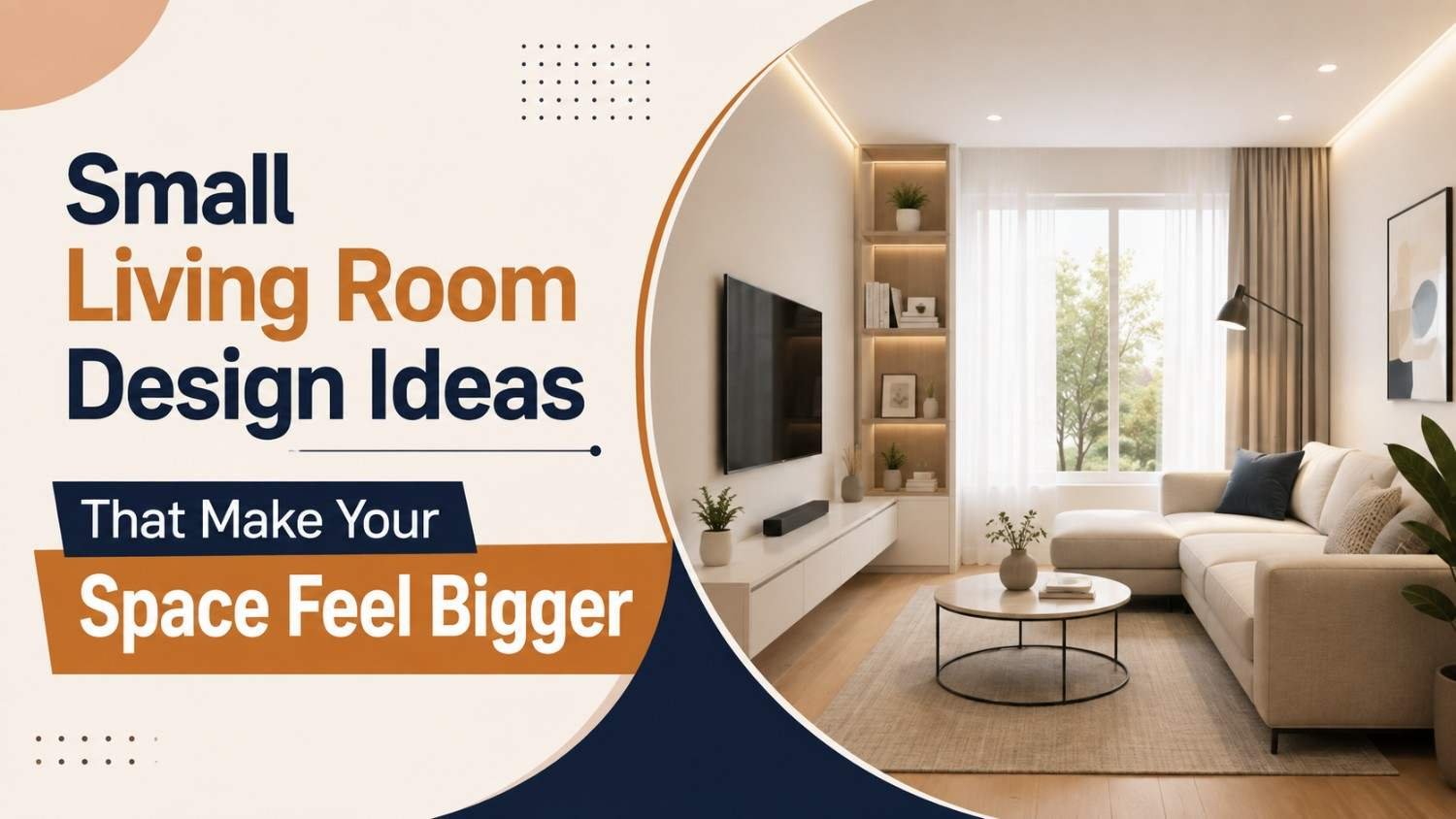
A small living room can start to feel really crowded, fast, when basically every piece of furniture is jostling for that same limited floor space. Like you put in a big sofa, a bulky TV unit, heavy curtains, an oversized coffee table , plus far too many decorative bits and suddenly even a place that was well-planned can feel off, uncomfortable. And the strange part is the issue is not always the real size of the room. Sometimes it’s the furniture proportions that are a bit wrong, or pathways getting blocked, or dark colours taking over, or visual clutter piling up. Even not enough lighting can trick your eyes, so the available area seems a lot smaller than it actually is.
The good news though is that you do not always need major structural changes to make a compact living room feel more spacious. With a careful small living room design approach, you can boost both how it looks and how it functions day to day. Pick furniture that matches the scale, keep sightlines open , use vertical space where you can, add mirrors, rein in the clutter, and stick to a consistent colour scheme. Then a modest room can feel brighter, and also more open. The objective isn’t to make the room look empty, it’s to make each design choice do more work for you.
Understand What Makes a Small Living Room Feel Smaller
Before buying new furniture or changing the wall colour, pause for a moment and see what is actually making the room feel cramped. A lot of times the biggest issue is not the room itself, it’s more the number and the whole arrangement of objects inside. Furniture that blocks pathways, heavy dark visual masses , crowded surfaces and even poor lighting can quietly reduce the feeling of openness. So the first step is to spot what can be removed, moved elsewhere, swapped out, or just visually simplified. Most interior design guidance nowadays really leans on open sightlines, well scaled furniture, vertical storage, mirrors, better lighting, and careful layouts as practical ways to improve how spacious the area feels.
Start With the Right Furniture Size
Furniture has to fit the room. A common mistake is picking a big sofa because it looks cozy in a showroom, without thinking about how much floor space it will take up at home. A compact room doesn’t always mean you need tiny furniture, but every main piece should have enough surrounding space so you can move comfortably. A correctly sized sofa , plus a slim coffee table and one or two lighter accent pieces can feel more airy than multiple small pieces that are all packed together .
Before buying furniture:
- Measure the room and doorways.
- Mark the proposed furniture footprint.
- Check walking paths.
- Consider door and window openings.
- Avoid pieces that unnecessarily block natural light.
Keep the Floor as Visible as Possible
Visible flooring can give the room a more open, airier feeling, like you’re not constantly bumping into a solid block. And furniture that has exposed legs helps a lot, because the eye can travel under the pieces. That reduces the heavy look you can get when solid furniture goes all the way down to the floor. Still, this doesn’t mean everything has to be lifted. Instead, mix anchored items with furniture that reads lighter, in the places where it makes the most sense. A sofa with visible legs, a narrow console, or a coffee table with an open base can create extra visual breathing room. Many designers also suggest lifting furniture off the floor as a quick trick to make compact spaces feel less visually weighed down, and yes it can work even when the room is small.
Create an Open Furniture Arrangement
The placement of your furniture can matter more than the total number of pieces you own. A room can feel surprisingly spacious when the main pathway stays clear and seating is arranged around one clear focal point. Don’t just push every item against the wall, even if the room is small. In some layouts, pulling a sofa a little bit off the wall can improve movement and make the arrangement feel more deliberate. The main idea is to keep sightlines open, so there’s an easy visual flow between the entrance, the seating, the windows and other important areas.
Choose a Light and Consistent Colour Palette
Color affects perception more than most people think. Light neutrals , warm whites, soft beige, pale grey, and quiet natural shades can bounce light around and keep the space feeling visually continuous. A small room doesn’t need to be fully white everywhere though. The bigger concern is avoiding too many competing colors, because that can split the room into separate sections. For a cohesive small living room interior design, pick one primary wall color, one or two supporting tones, then add only small bursts of contrast through cushions, artwork, plants, or simple accessories.
Use Mirrors to Add Visual Depth
A mirror set up in a good, almost thoughtful way can make a compact living room seem deeper, and also brighter— like it stretches a bit. Instead of dropping a bunch of smaller mirrors all over, try one larger piece placed so it can catch a window, a main light source, or some nice focal part of the room. The whole trick really relies on placement, because a mirror staring at a plain uninteresting wall might just sit there doing very little, but a mirror that bounces daylight back into the space, or gives you an open sightline, can make the area feel a lot more spacious. Interior design experts tend to mention mirrors again and again as a simple visual method for helping smaller rooms feel larger.
Maximize Natural Light
Natural light, when you let it in, can completely shift how a small room feels. Thick curtains, dark window coverings, or even furniture sitting right in front of the glass can cut down on illumination in a hurry. Pick window treatments that still let daytime pass through while giving you the privacy you want. Also, hanging curtains a little higher can pull the eye upward, which often makes the room feel taller. Many current design tips recommend bringing window treatments closer to the ceiling height when it makes sense, so the vertical lines stand out more. Keep the window zone visually clean so the room gets every bit of natural brightness it can.
Layer Your Lighting
A single ceiling fixture usually isn’t enough to make a small living room feel warm and welcoming. Using several light sources helps create depth, and it reduces those darker corners that can make walls feel closer. Blend general lighting with floor lamps, table lamps, wall lights, or a few accent lights positioned on purpose. The aim isn’t to turn the place into a bright showroom, it’s more about spreading the light around so the space feels even, and comfortable.
A practical lighting combination can include:
- One primary ceiling light.
- A floor or table lamp near seating.
- Focused lighting around artwork or shelving.
- Soft illumination near darker corners.
Layered lighting is also recommended by designers as a way to visually expand compact living rooms.
Use Vertical Space
When floor space is limited, look upward a bit . Tall bookshelves, vertical cabinets, wall-mounted storage, and floor-to-ceiling elements can help you store things without eating up floor area like several low cabinets do. That vertical design also nudges your eye to move up, which can make the room feel higher, and honestly more open. If your ceiling is low, use uninterrupted vertical pieces , and place curtains carefully so the lines pull the view up. The trick is don t fill every inch of wall with storage. Leave some spots visually calm, otherwise it can start to feel too much, like the room is wearing you down.
Choose Multi-Functional Furniture
When space is limited, furniture that does more than one job can be really useful. For instance a storage ottoman can be seating, a footrest , and hidden storage all at once. A nesting table can give extra surface space when needed, without staying there like a permanent footprint. Modern compact living spaces are increasingly relying on pieces built for flexibility and multiple uses. And a lot of recent small-space furniture advice also points to storage ottomans, transforming pieces, and other space-efficient solutions.
Consider a Wall-Mounted TV Unit
A bulky entertainment cabinet can take up a lot of valuable floor space, more than you might expect. If your room and wall structure allow it, mounting the television can reduce clutter down low. A slim wall-mounted console or a floating cabinet can still offer storage while keeping more flooring visible underneath. Just remember electrical points and cable management should be planned before you install anything. A tidy cable setup makes a way bigger difference than just mounting the TV, even if it seems minor at first.
Select the Right Coffee Table
A coffee table can end up being one of the biggest obstacles in a small living room. Instead of picking some heavy rectangular table just because it s “the standard”, try something slimmer, nesting tables, a round table, or even a piece with hidden storage. The right call kind of depends on how you set up the sofa, plus the walking space around it. You should be able to pass around the table comfortably without constantly bumping your knees or dragging your legs into it.
Use One Larger Rug Instead of A Bunch of Smaller Rugs
A rug helps, in a quiet way, to define the seating zone, but the size and where it sits really changes things. If the rug is too small , the whole furniture arrangement can look split up or kind of disconnected. A correctly sized rug can “stitch” the sofa , any chairs, and the coffee table into one smoother area. Also, newer design advice keeps pointing at rug placement, size, color, and shape as key details for making small rooms feel more airy. The goal is one unified seating area, not multiple little islands that break up the room.
Avoid Excessive Decorative Clutter
Small rooms have a tight visual budget. Too many cushions, decorative objects, framed pictures, plants, and accessories can make everything feel packed fast. You do not have to strip out all personality from the space. Instead, keep fewer items and choose pieces that give you more visual weight, like less stuff , but better impact.
Try this simple approach:
- Keep frequently used surfaces relatively clear.
- Group decorative objects instead of spreading them everywhere.
- Use one strong artwork instead of several unrelated pieces.
- Store everyday clutter out of sight.
- Rotate seasonal decorations rather than displaying everything together.
Use Curtains to Create Height
Curtains can influence how tall the room appears. Instead of installing the curtain rod directly above the window frame, consider positioning it higher where the room’s architecture allows. Full-length curtains can also emphasize vertical lines. Choose fabrics that complement the wall colour rather than creating a strong horizontal division. The overall effect should encourage the eye to travel upward rather than stop at the window.
Use a Single Visual Theme
A room can feel smaller when every item belongs to a different style or colour family. A consistent design language helps the space feel more organized. You could use warm minimalism, contemporary neutrals, Scandinavian-inspired simplicity, modern Indian interiors, or another style that suits your home. Consistency does not mean everything must match. Instead, repeat a few materials, colours, textures, or shapes throughout the room.
Make Storage Part of the Design
Storage is essential because clutter is one of the fastest ways to make a compact living room feel crowded. Rather than adding random storage furniture whenever items accumulate, plan storage around the room’s actual needs. A slim console, built-in cabinet, floating shelf, storage ottoman, or tall cabinet can help keep frequently used items organized. The best storage is often the storage that disappears visually. When cabinets blend with walls or furniture, the room can appear calmer and less fragmented.
Keep One Area Visually Calm
You do not need to decorate every wall. Leaving one wall relatively simple can provide visual breathing space. This becomes particularly valuable when the room already contains a patterned rug, artwork, shelves, or statement furniture. A calm wall can make the more decorative elements feel intentional rather than excessive.
Use Glass and Reflective Materials Carefully
Transparent or reflective materials can reduce visual weight. A glass coffee table, for example, allows more of the flooring beneath it to remain visible. Reflective cabinet surfaces or metallic accents can also bounce light around the room. However, too many glossy surfaces can make a space feel cold or overly busy. Use them as supporting elements rather than making every surface reflective.
Choose Furniture With Multiple Uses
A compact living room may need to support several activities, including watching television, entertaining guests, reading, working, and relaxing. Instead of assigning a separate large piece of furniture to every activity, choose flexible pieces. A compact desk can double as a console. A storage bench can provide additional seating. Nesting tables can expand when guests arrive and remain compact when they are not needed. This approach makes the room more adaptable without adding unnecessary furniture.
Make a Small Living Room Feel Bigger on a Budget
You do not have to replace everything to create a better space. Start with changes that cost little or nothing. Rearrange the furniture, remove unnecessary items, clear the windows, move decorative pieces, and experiment with the lighting you already have. Then consider inexpensive improvements such as new cushion covers, lighter curtains, a strategically placed mirror, or better-organized storage.
A budget-friendly order of changes:
- Declutter first.
- Rearrange furniture.
- Improve lighting.
- Change curtains if necessary.
- Add one appropriately sized mirror.
- Introduce a cohesive rug.
- Replace only the furniture that genuinely does not fit.
This approach helps you understand what the room actually needs before spending heavily.
Small Living Room Ideas for Indian Homes
Compact apartments show up a lot in many Indian cities , so planning the living room in a smart way is really relevant . In Indian homes the living room may have to do much more than just sit, like family gatherings, hosting guests, entertainment, a small prayer area, plus storage and daily routines. Because of this flexible furniture and careful circulation paths end up being pretty important , almost like a quiet puzzle. It’s also better to use furniture proportions that actually fit the room size , rather than copying the look from big international homes. And don’t forget to think about ventilation, natural light, how many people live there , how hard things are to maintain, and how this room connects to the dining area or even the balcony .
Common Small Living Room Design Mistakes
Buying Furniture Before Measuring
A beautiful sofa is not useful if it blocks the entrance or leaves no comfortable walking space.
Using Too Many Small Pieces
Several small furniture pieces can sometimes create more visual clutter than one appropriately sized piece.
Blocking Windows
Large furniture placed directly in front of windows can reduce natural light and make the room feel enclosed.
Choosing a Tiny Rug
A rug that is too small can make the seating arrangement appear disconnected.
Ignoring Storage
Without a planned place for everyday items, clutter quickly returns even after a beautiful makeover.
Overdecorating the Walls
Too many frames, shelves, and decorative objects can make a small room visually noisy.
A Simple Small Living Room Makeover Plan
If you want to refresh your room without doing a full renovation, do it a bit in stages, not all at once. First, take out the things you rarely use, like you know.. the extra stuff that just stays around. Then go ahead and measure the space and sketch a basic furniture arrangement that keeps movement easy and not blocked. Before you start adding decorative pieces, work on the lighting, both natural and artificial , because it really changes how the room feels. After that, bring in one or two “visual expansion” moves, like a big mirror, lighter curtains, one cohesive rug, or vertical storage that makes the walls do more. Finally finish with just a small handful of decor items that support the overall look, rather than pulling attention away from it.
How to Make a Small Living Room Feel Bigger Without Renovating
Most of the biggest improvements actually come from choices that do not require construction. A smarter furniture setup can open up the room almost right away. Pulling out a bulky cabinet can uncover more usable floor area, and raising or widening the curtains can make the ceiling seem higher. A mirror, especially placed well, can bounce daylight around. Also, better storage tends to lower the amount of visible clutter, which makes everything feel calmer. So yeah, small living room ideas should usually start with layout and organization first, before you spend money on any expensive renovation work. Often the room already has enough potential, it just needs to be used a little more intelligently, and not like… on autopilot.
Conclusion
A small living room does not need to feel cramped, dark, or plain uncomfortable. The best Small Living Room Design approaches focus on both perception and function: pick furniture that matches the scale, protect clear walkways, keep more floor visible, use vertical storage, manage clutter, maximize natural light, layer your artificial lighting, and use mirrors or other reflective surfaces in a thoughtful way. These ideas line up with common current interior-design guidance too, which tends to highlight furniture scale, open sightlines, lighting, mirrors, color, and storage to help compact rooms feel more spacious. You do not need to completely renovate your home to create a better living room. With a thoughtful layout and a few carefully chosen changes, even a compact space can feel brighter, calmer, more functional, and considerably more open.
Frequently Asked Questions
1. How can I make a small living room look bigger?
Start by reducing clutter, choosing appropriately sized furniture, keeping pathways open, maximizing natural light, and using mirrors strategically. A consistent light colour palette can also create a stronger sense of visual continuity.
2. What colour is best for a small living room?
Light neutrals such as warm white, cream, beige, and soft grey can help reflect light and create an open appearance. You can still add darker or brighter accents through cushions, artwork, rugs, or accessories.
3. Is a large sofa suitable for a small living room?
A large sofa can work if its proportions suit the room and there is still enough space for comfortable movement. The problem is usually oversized furniture that blocks pathways or dominates the entire floor area.
4. Do mirrors really make small rooms look bigger?
A strategically positioned mirror can create the perception of greater depth and reflect available light. Placement matters, so position it where it can reflect a window, light source, or visually open part of the room.
5. How can I design a small living room on a budget?
Begin with decluttering and rearranging existing furniture before buying anything. Then prioritize affordable improvements such as better lighting, lighter curtains, organized storage, a suitable rug, or one well-positioned mirror.










Leave a Reply