
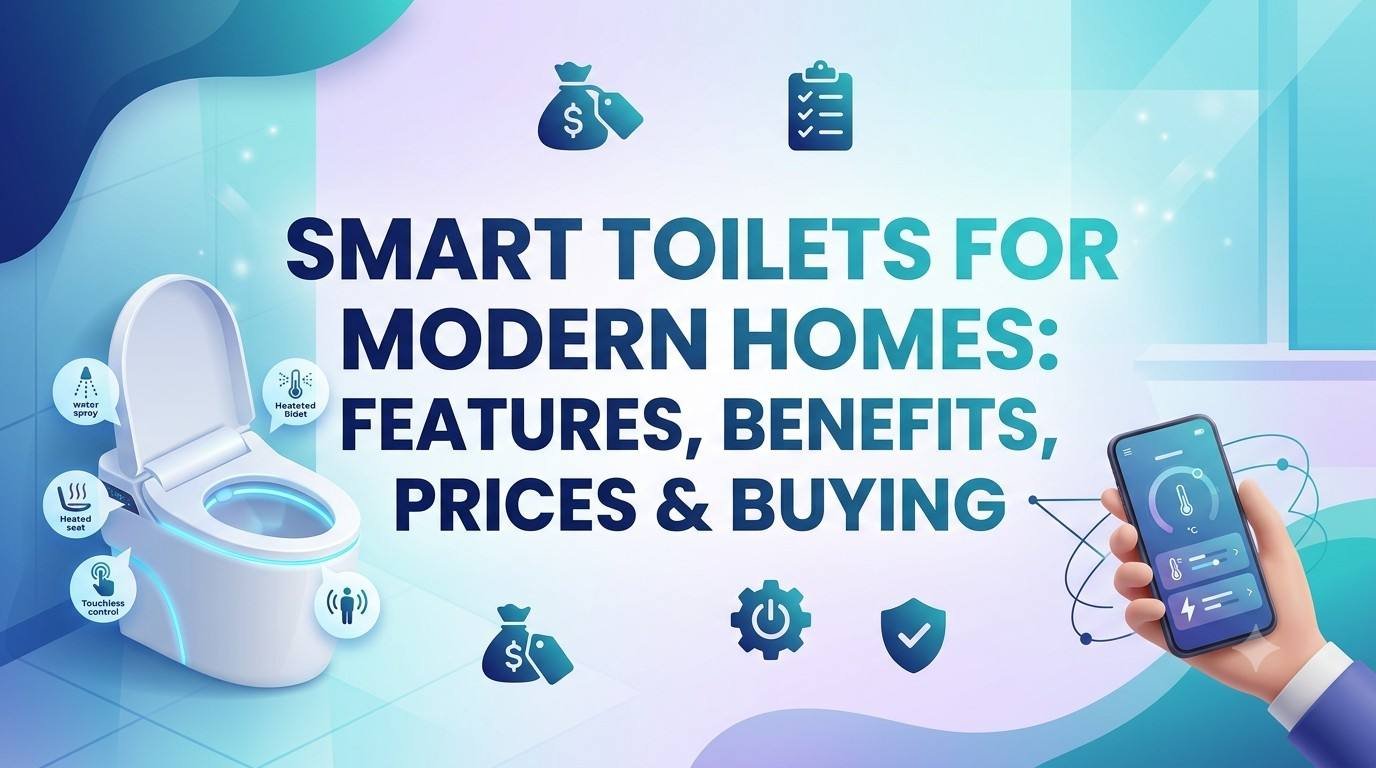
Bathrooms are no longer treated like they’re just functional spaces, you know. Modern homeowners increasingly want bathrooms that blend hygiene with comfort, plus convenience accessibility, and a little technology too. Still, picking the right fixture can feel kinda confusing, especially when conventional toilets are now sitting right beside newer kinds that promise automatic flushing heated seats, bidet washing night lights, and sensor based controls. If you don’t really know which features matter in real life, it becomes easy to pay more but not get the matching value back.
A smart toilet for home can bring multiple useful technologies into one bathroom fixture, however it also needs careful planning, not just a quick buy. You should think about the power supply, the plumbing situation, the bathroom dimensions, ongoing maintenance, water pressure, and the installation requirements. Before installing anything, this guide walks through how smart toilets work, the biggest features and benefits, possible drawbacks, what kind of pricing to expect, and what to verify before going ahead with the setup.
What Is a Smart Toilet?
A smart toilet is like an electronically enhanced bathroom fixture , made to boost hygiene and also comfort, convenience, and sometimes even water efficiency. Depending on the exact model, it can merge functions that, in other homes, would need separate fixtures or additional accessories, which feels sort of streamline. In some cases you get more than one use from the same piece of equipment, kind of like a quiet upgrade without thinking too much.
Common technologies include:
- Automatic flushing
- Heated seats
- Built-in bidet washing
- Adjustable water pressure
- Warm-air drying
- Motion sensors
- Night lighting
- Automatic lid opening and closing
- Self-cleaning functions
- Remote controls
The exact features vary considerably between models, so buyers should compare specifications rather than assuming every smart WC offers the same capabilities.
Why Are Smart Toilets Becoming Popular?
The growing interest in smart bathroom technology comes from a mix of convenience , hygiene awareness, accessibility, and this whole modern interior design vibe. Instead of a conventional toilet, a connected or electronically controlled model can do, and kind of coordinate, several everyday actions automatically . That ends up being pretty handy especially for households that want hands-free operation, or are really after extra comfort, you know.
That said, the tech should really follow the bathroom’s practical needs, not just tack on more features. A homeowner who rarely uses automated functions might end up choosing a basic model which feels more sensible , than paying for an expensive premium system.
Smart Toilet Features You Should Know
1. Automatic Flushing
Automatic flushing relies on sensors to notice when the toilet has been used, then it can start flushing without anyone having to touch anything. This hands-free setup helps, sort of quietly, to make the bathroom feel more convenient, and it also cuts down on how much you have to press the flush button or grab the handle. Still, a lot of models do keep manual controls too, so if someone prefers direct use it’s there. When you’re comparing options, pay attention to the exact way the sensor detects use, and also if the toilet still supports manual operation in case there’s a power interruption.
2. Heated Toilet Seat
A heated seat is basically comfort-first tech that shows up on many higher-end smart toilets. The warmth can usually be adjusted to match personal preference, which is why it feels extra nice during colder weather. Some systems let you tweak the temperature and settings using a remote control, which sounds simple but makes a difference. Even though it doesn’t really change the core toilet function, it can make day to day use feel better.
3. Built-In Bidet Function
A built-in bidet function delivers a controlled water spray for personal cleansing after you use the toilet. It can lower how much toilet paper you rely on, and for many people it feels more hygienic because the cleaning is water-based rather than just wiping.
Before you commit to a model, check if the spray position is adjustable, and also whether the water pressure and temperature can be changed. These small settings can seriously affect comfort, more than most people expect at first.
4. Warm-Air Dryer
Some more advanced models come with a warm-air dryer, it is designed to reduce how much toilet paper people need after using the bidet thing. This can make the whole experience a bit easier and, maybe, lower paper usage. Still, drying results won’t always be the same, because each model works a little differently. So it’s a good idea to look at the temperature range , the drying time, and the way the controls are arranged before spending extra for that feature.
5. Automatic Lid and Seat
Some automatic toilet options include sensors that control when the lid and seat open, and when they close too. The lid might open as someone comes near and it can shut on its own after use. Besides the obvious ease, this helps cut down on how many surfaces users have to touch. It’s especially handy in homes where hands-free operation is treated like a priority.
6. Night Light
A built-in LED light can add a calm kind of glow during late-night bathroom moments. Instead of turning on a harsh overhead lamp, users can move around using a softer integrated light. This can be pretty useful in bedrooms with attached bathrooms, where you don’t want to wake up the whole place. When picking a model, consider whether the lighting intensity can be adjusted, and if the light turns on by itself.
7. Remote Control
A smart toilet might also offer a separate remote control, for changing washing, drying, seat temperature, flushing, and a few other functions. The control setup should feel intuitive, not overly complex. Before buying, it’s worth checking if key functions still work even when the remote is missing. Sometimes, simple controls are more valuable than a long list of fancy options that people never fully understand, or just do not use.
Benefits of Smart Toilets for Modern Homes
Better Hygiene
Touchless flushing , bidet washing, and self cleaning functions can cut down on physical contact with bathroom surfaces that people touch a lot. Still, even with smart features, regular bathroom cleaning stays important. Like, even if a toilet claims automated cleaning, it still needs proper upkeep. The big takeaway is that the tech mostly fills in gaps for good hygiene habits, not fully replace them.
Greater comfort
Stuff like heated seats, adjustable water temperature , warm air drying , and automatic lids are mostly there for comfort. In other words these options can feel extra attractive in premium bathrooms, where homeowners want something that feels more personal or tailored. For some homes, comfort features are basically the main reason people upgrade to a modern smart bathroom.
Touch free convenience
Operating without touching can make routine bathroom use feel smoother. Automatic flushing, sensor controlled lids, and hands free functions reduce how often you have to physically interact with controls.
This is often useful for older adults, people with limited mobility, or anyone who just finds traditional buttons and levers hard to manage.
Potential water savings
Certain smart toilet systems use sensors or more efficient flushing, in an attempt to manage water use. But water savings differ from one model to the next and they also depend on how someone uses it, so shoppers should verify the manufacturer’s real flush specs instead of going by broad promises. Pairing a water efficient toilet with responsible home water habits can help keep the whole bathroom more sustainable.
Smart Toilet Benefits for Elderly Users
When choosing bathroom fixtures, accessibility is really something you want to think about early. Comfort-height models, for example, can make it easier for some older adults to sit down and then stand up without too much trouble. Hands-free controls also help, because there’s less need to reach, bend, or do that awkward lean thing.
Adjustable bidet washing plus remote controls might offer even more independence. If a household is planning an accessible bathroom design, it’s smart to look at the entire bathroom layout, not just the toilet sitting there. Grab bars, clear maneuvering space, the right flooring, door width, and controls that can be reached comfortably are often just as important.
Smart Toilets and Bathroom Design
A smart toilet should be part of the bathroom plan, not something you tack on at the very last minute. Things like its size, how much electrical power it needs, plumbing hookups, the clearance around the seat, and even how you access it for maintenance, all need to match what’s already happening in the room.
For that clean, contemporary look, homeowners can blend a smart toilet with wall-mounted fittings, hidden plumbing, minimalist tiles, sensor lighting, and functional storage. The goal is a bathroom that feels kind of unified and together, not just a normal bathroom with one giant technological fixture stuck in the middle
Smart Toilet Price in India
In India, the price of a smart toilet can shift a lot based on brand, tech level, materials, installation needs, and how many extra features it includes. The reference article suggests entry-level smart toilet options around ₹24,000–₹33,000, while premium versions can go all the way to several lakh rupees. It also mentions the Kohler Numi 2.0 as a premium example, priced at roughly ₹9.25 lakh when the article was published
Because prices change and specifications differ, buyers should treat these figures as indicative rather than fixed market prices. Before comparing prices, check whether the quoted amount includes installation, electrical work, plumbing modifications, warranty coverage, and after-sales support.
What Determines the Cost of a Smart Toilet?
Several factors influence the final purchase price.
Basic Features
Models with automatic flushing and bidet functions generally have fewer technological components and can be more affordable.
Advanced Comfort
Heated seats, warm-air drying, adjustable water temperature, and personalized settings can increase the price.
Automation
Automatic lids, sensors, remote controls, and integrated lighting can add to the overall cost.
Brand and Build Quality
Established manufacturers may charge more because of materials, engineering, warranty support, and service availability.
Installation
Electrical points, plumbing changes, water connections, and bathroom modifications may add to the installation budget. Therefore, the purchase price should not be the only number considered when calculating the smart toilet installation cost.
What to Check Before Buying a Smart Toilet
Before choosing a model, evaluate the following:
- Measure the bathroom and available toilet space.
- Check the toilet’s dimensions and bowl shape.
- Confirm electrical requirements.
- Check water pressure requirements.
- Understand installation requirements.
- Review warranty coverage.
- Check service availability in your area.
- Compare replacement parts and maintenance costs.
- Confirm whether manual functions work during power failure.
- Read the complete feature list before purchasing.
These checks can prevent expensive compatibility problems after installation.
Round or Elongated: Which Toilet Shape Is Better?
Smart toilets show up in a bunch of bowl styles, like rounded ones and elongated ones, and well, even a few other shapes that kinda look similar at first glance. The “right” option really hinges on how much room you have in the bathroom and what feels comfortable to the user. If you’re switching out a toilet that’s already there, or you’re thinking about adding a smart bidet seat, then measurements matter a lot, not just a little.
Before you buy anything, measure the existing bowl, the mounting points, the clearances around it, and the space near it. A more advanced, technologically driven toilet is basically pointless if its overall dimensions don’t match your bathroom layout. It should fit properly, otherwise it will never sit right, or you’ll end up with weird installation problems.
Toilet height matters, too
Comfort height is often a big deal for older adults, and for people with mobility limitations. A comfort-height toilet typically places the seat a bit higher than most standard models, so getting down and getting up can feel less strenuous for some folks.
Still, height is a personal preference and not some universal rule. The better choice depends on the user’s physical needs, the current bathroom design, and the toilet’s specific measurements. If accessibility is the goal, line up the toilet height with grab bars and the surrounding clearance, because both of those together tend to decide what works in real life.
Installation Requirements for Smart Toilets
Smart toilets require more planning than conventional models because electronic features need electricity as well as plumbing.
A professional installer should verify:
- Electrical connection and safety.
- Water inlet location.
- Drain compatibility.
- Available bathroom space.
- Earthing and electrical protection.
- Manufacturer installation requirements.
Avoid improvising electrical connections in wet bathroom environments. Proper installation is essential for both safety and long-term reliability.
Maintenance of Smart Toilets
Technology does not mean maintenance-free operation. Regular cleaning remains necessary, while electronic components should be handled according to the manufacturer’s instructions.
Useful maintenance practices include:
- Use recommended cleaning products.
- Avoid harsh chemicals on electronic components.
- Clean the bowl and seat regularly.
- Check the bidet nozzle according to manufacturer instructions.
- Keep sensors free from dirt.
- Inspect water connections for leaks.
- Follow recommended servicing schedules.
The reference article similarly advises avoiding harsh cleaners on plastic and electronic components and recommends routine cleaning of the toilet surface and bidet nozzle.
Are Smart Toilets Worth the Investment?
Whether a smart toilet is worth buying kind of depends on what you care about most, and what you can spend. It can be a solid buy if you really value hygiene, easier access, automation, comfort, and that modern bathroom tech vibe.
But if you are a homeowner with a tighter renovation budget, it usually makes more sense to put first things first. Like plumbing quality, ventilation, waterproofing, flooring, storage, and the basic sanitary fixtures, before you drop money on more advanced toilet features. The best option is the one that makes daily routines smoother, without messing up the overall bathroom budget.
Smart Toilet vs Traditional Toilet
A traditional toilet is mostly simpler, generally easier to keep up with, and it is less tied to electricity. A smart toilet brings extra convenience, plus personalized features, but it also adds more electronics, installation requirements, and maintenance considerations.
If your bathroom is fairly straightforward, a conventional toilet might be completely fine. However, for a premium bathroom or one that is accessibility focused, smart functions can bring real benefits. So the call should be based on your actual household needs, not just the technology, alone.
Final Tips for Choosing a Smart Toilet
Before you make the final purchase, pause and focus on the features you will really use, not the ones that just look flashy. Try not to pick a model only because it has the longest feature list. Rather, compare hygiene functions, comfort, dependability, installation needs, warranty terms, service support, and what long-term upkeep will realistically mean for you.
Also, think about the full bathroom, not only the toilet. A smart toilet tends to work best when it’s placed into a properly designed space, with the right kind of ventilation, lighting, waterproofing, storage layout, and access for everyone who needs it. If you take a careful, slightly broader look, you end up investing in useful technology, instead of paying for pricey extras that sit there unused, more or less.
Conclusion
Smart toilets are turning into a pretty interesting option for modern homes, mostly because they blend the usual bathroom functions with tech aimed at hygiene, comfort, accessibility, and everyday ease. Things like automatic flushing, heated seats, a built-in bidet, warm-air drying, night lighting, and sensor-based lids can make the whole bathroom feel more personal. Still, the higher upfront cost, electrical requirements, installation complexity, and ongoing maintenance tasks are all factors you should weigh before buying.
Frequently Asked Questions
1. What is a smart toilet?
A smart toilet is an electronically enhanced toilet that can include features such as automatic flushing, bidet washing, heated seats, sensors, night lighting, and automated lids.
2. How much does a smart toilet cost in India?
Prices vary widely according to features and brand. Entry-level models can start around ₹24,000, while premium models may cost several lakh rupees.
3. Does a smart toilet need electricity?
Yes, most fully integrated smart toilets require electricity for features such as sensors, heating, bidet functions, lighting, and automated controls.
4. Are smart toilets difficult to maintain?
They require regular cleaning and appropriate care for electronic and mechanical components. Following the manufacturer’s maintenance instructions is important.
5. Are smart toilets suitable for elderly people?
They can be useful because features such as comfort-height designs, bidet washing, remote controls, and hands-free operation may make bathroom use easier for some older adults.








Leave a Reply