
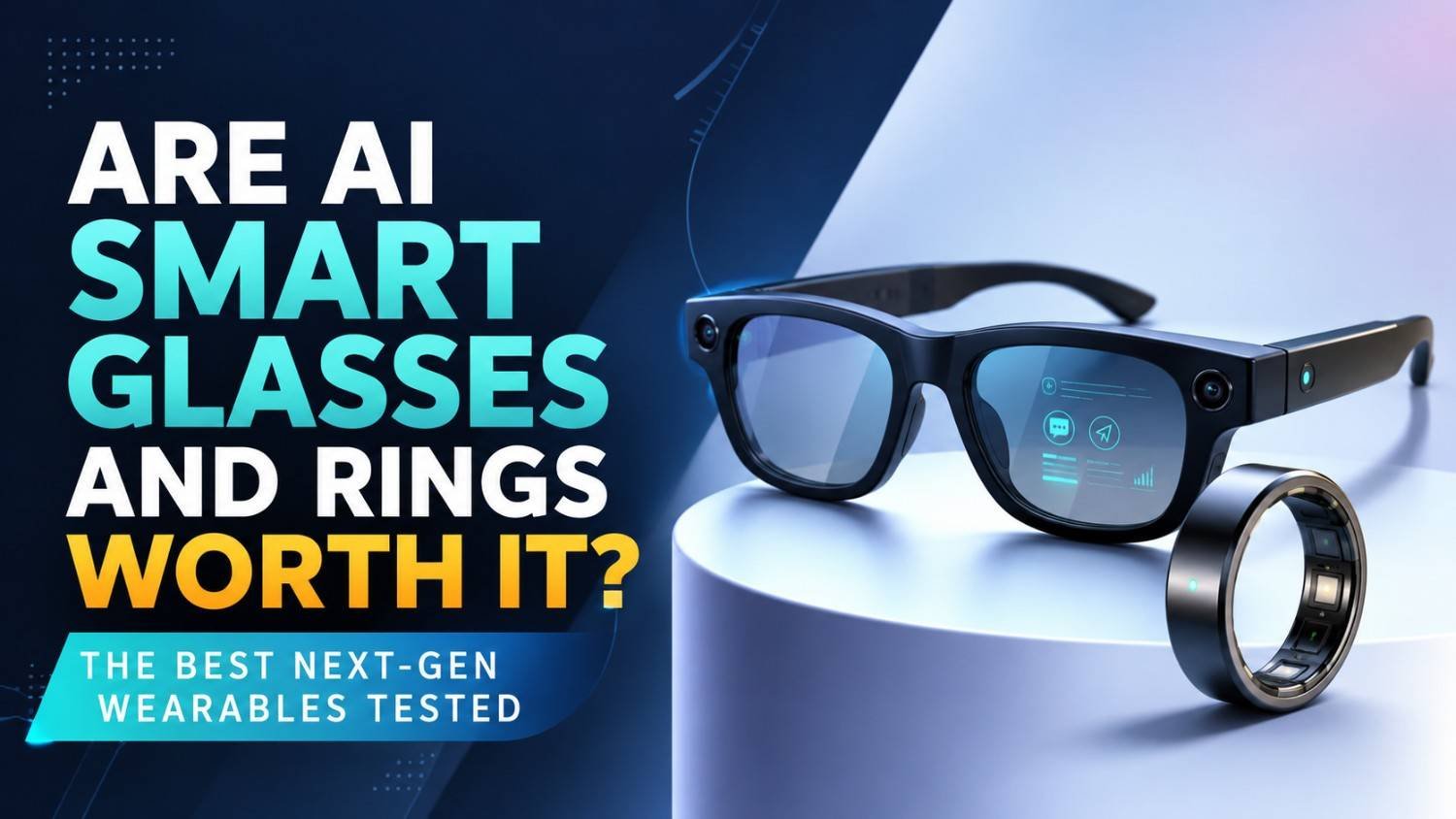
Wearable technology has come a long way beyond those basic fitness trackers and smartwatches , right. Artificial intelligence now turns everyday accessories into something like intelligent personal helpers that can see, hear, interpret, and then react back in real time. AI-powered smart glasses can translate what people say, snag hands-free photos, answer your questions, and throw in contextual info while you’re moving around. And the smart rings? They sit there quietly yet monitor sleep, heart rate, activity level, stress signals, and a general wellness picture. With more and more tech companies putting money into AI-driven wearables, people start to wonder, maybe more than once, are these next-generation devices actually useful, or is it just another quick, short-lived tech fashion that passes ?
The real answer depends on how you plan to use them. Today’s AI Smart Glasses and Smart Rings are getting more capable, mainly because of better artificial intelligence, smaller sensor designs, improved battery efficiency, and cloud computing support. They’re not flawless, sure, but they’re drifting past the “wow, cool” phase and slowly becoming practical tools for working faster, communicating easier, navigating smarter, and keeping an eye on health. This guide kind of walks you through how AI-powered wearables work, it compares what they do well versus where they fall short, highlights several of the most popular devices on the market right now, and helps you decide if spending on next-generation wearable tech fits your day to day life .
What Are AI Wearables?
AI Wearables are basically devices that mash up wearable hardware with artificial intelligence, so they can offer personalized insights, and also handle automation, while basically helping the user throughout the day. In contrast to those traditional wearables that mostly just gather data, AI-powered gadgets actually sift through the information in real time, to bring out more sensible recommendations and contextual help. On the device side they can capture speech, keep tabs on health metrics, map out user habits and then respond in a more natural way using voice prompts or via mobile applications. As the AI models keep getting better, these wearable devices are starting to behave like proactive assistants, not passive trackers.
Why AI Wearables Are Growing in Popularity
People are starting to ask for tech that is actually useful, but also sort of unobtrusive. Instead of spending time checking smartphones, a lot of users would rather have something that feeds them information quietly, kind of in the background, while they can stay aware of where they are, and what’s around them.
AI wearables fit that need, because they can deliver hands free help for day to day life—health monitoring, directions, work related tools, and notifications that feel more personal. On top of that, better battery life, lighter materials, and faster AI processing mean the devices are more realistic for everyday use, not just for demos or weekend experiments.
Understanding AI Smart Glasses
AI smart glasses bring together cameras, microphones, speakers, sensors, and AI software inside eyewear that still looks fairly normal. They aren’t really meant to replace your smartphone, instead they expand smartphone features into something more natural, and you dont have to keep using your hands. Today’s AI smart glasses can handle questions through voice assistants, recognize places like landmarks, translate what people say, record photos and videos, read text aloud, and offer navigation help. They can also summarize information for you, which means you spend less time staring at a screen, and more time just seeing.
Common Features
- Voice assistant integration.
- Hands-free photography.
- Live translation.
- Navigation assistance.
- AI-powered search.
- Audio playback.
What Are Smart Rings?
Smart Rings are pretty compact wearables meant for monitoring health and wellness ,and still being comfortable enough to keep on all day and night. Even though they’re small, most models pack sensors that can track heart rhythm, sleep patterns, general movement, stress levels, body temperature, and recovery insights too. Compared with the bigger smartwatches, smart rings are more about being discreet, lasting a long time on a charge, and doing quiet, passive data collection. Because they’re lightweight, they tend to suit people who want minimal wearable tech without losing those deeper health observations.
Typical Features
- Sleep tracking.
- Heart rate monitoring.
- Activity measurement.
- Recovery analysis.
- Temperature sensing.
- Stress monitoring.
How Artificial Intelligence Makes Wearables Smarter
The real worth of modern wearables kinda comes from Artificial Intelligence, more than just the devices or the hardware. AI turns raw sensor data into usable, sensible insights, so people can decide things with more clarity. Rather than only stating heart rate or reporting sleep duration, AI digs into trends that build up over time, it spots odd behaviors, forecasts recovery needs, suggests more balanced routines, and then adjusts recommendations based on how the individual actually behaves day to day. That personal, tailored style makes wearable technology feel a lot more valuable than older generations, honestly .
AI Smart Glasses: Advantages and Limitations
AI-powered glasses offer a unique combination of convenience and productivity, particularly for professionals who need hands-free access to information.
Advantages
- Natural voice interaction.
- Hands-free communication.
- Real-time translation.
- Easy photo capture.
- Improved navigation.
However, there are still limitations that potential buyers should consider.
Limitations
- Battery life remains limited.
- Privacy concerns around cameras.
- Higher purchase cost.
- Dependence on smartphone connectivity.
- Some AI features require internet access.
Understanding both strengths and weaknesses helps set realistic expectations before purchasing.
Smart Rings: Advantages and Limitations
Smart rings excel in passive health tracking and long-term comfort.
Advantages
- Comfortable to wear.
- Long battery life.
- Continuous health monitoring.
- Lightweight design.
- Discreet appearance.
Despite these strengths, they also have some drawbacks.
Limitations
- Smaller displays or no display.
- Limited interaction compared to watches.
- Fewer third-party applications.
- Size selection is important.
- Premium models can be expensive.
For users primarily interested in wellness tracking, these trade-offs are often acceptable.
Best AI Smart Glasses Worth Considering
Several manufacturers are pushing the envelope with AI powered eyewear, mixing fresh looks with intelligent software, like that kind of vibe. A lot of popular choices tend to lean into things such as voice assistants, AI search, instant translation, photo capture, music playback, and those contextual hints that pop up when you need them. Sure, performance differs from brand to brand, but these days many devices seem to care more about everyday comfort, privacy upgrades, and practical use rather than chasing experimental features only. When you’re comparing AI smart glasses, it helps to line up the basics like battery life, camera quality, audio output, how strong the AI really is, whether software updates arrive on time, and if the device plays nicely with your ecosystem.
Leading Smart Rings for Health Tracking
The smart ring scene has grown fast, because people want something lighter and less bulky than a classic smartwatch. A bunch of premium options now include deeper sleep analysis, heart rate variability monitoring, recovery scores, stress tracking, menstrual health insights, and readiness assessments. They also tend to sync with your phone so you get longer reports that make it easier to spot wellness trends over time. Picking the “right” smart ring depends on what you care about most health wise, whether you’re ok with any subscription requirements, how well it matches your operating system, and how it feels during continuous wear, no matter the hour.
Which Wearable Fits Your Lifestyle?
There isn’t one wearable that works for everyone, and that part is pretty obvious once you think about it. The best fit depends mostly on your own targets. If you’re aiming for productivity, hands free communication, navigation, and AI powered help throughout the day, smart glasses might end up being the better match. But if improving sleep, monitoring recovery, watching stress levels, and keeping long term wellness on track is your main focus, a smart ring is often the smarter investment, too. Some users may even benefit from combining both devices, using smart glasses during active hours and a smart ring for continuous health monitoring.
Privacy and Security Considerations
As wearable devices start collecting more and more personal information, privacy really becomes a big issue. AI wearables might end up processing voice recordings, location data, biometric signals, health metrics, and usage patterns, or at least thats what some manufacturers claim. Before buying any device, users should, review the privacy policies carefully, figure out what information is gathered, turn on the security options that are offered, and then keep installing software updates as they come out. Also choosing manufacturers that are clear and straight about how they protect data helps lower potential risks, while also building more trust in this whole wearable tech world.
Are AI Wearables Accurate?
A wearable device should never be treated as a full replacement for professional medical equipment. Even if sensor accuracy keeps getting better, readings can still shift based on where the sensors sit, how a person moves, the surrounding conditions, and individual physiology. The health insights produced by AI wearables should be treated like useful context not like a medical conclusion. If someone notices concerning symptoms, they should consult a qualified healthcare professional, not just lean on wearable data. This more balanced view matches evidence-based health practices and supports responsible use of wearable technology.
The Future of AI Wearables
The next generation of wearable technology is expected to become even more intelligent, thanks to advances in multimodal AI, edge computing, tiny sensors, and better battery performance. Looking ahead, future devices may deliver continuous language translation, more proactive health alerts, personalized coaching, insights tied to emotional well-being, and smoother integration with smart homes, cars, and workplace systems. Researchers are also exploring wearable devices capable of monitoring hydration, blood pressure trends, blood glucose indicators, respiratory health, and cognitive performance without invasive procedures. As hardware and AI continue evolving together, wearable technology may become an even more valuable companion for productivity, communication, and preventive health.
Buying Checklist Before You Invest
Before purchasing an AI wearable, consider the following questions:
- What is my primary goal—productivity or health?
- Does the device work with my smartphone?
- How important is battery life?
- Are there subscription fees?
- Is the privacy policy transparent?
- Will I realistically wear it every day?
- Does it receive regular software updates?
- Is customer support reliable?
Answering these questions helps ensure you choose a wearable that matches your needs rather than buying based solely on marketing claims.
Who Should Buy AI Smart Glasses?
AI smart glasses may be particularly valuable for:
- Business professionals.
- Frequent travelers.
- Content creators.
- Students.
- Remote workers.
- Field technicians.
- Language learners.
Their hands-free functionality makes them especially useful in situations where constantly checking a smartphone is inconvenient.
Who Should Buy a Smart Ring?
Smart rings are an excellent choice for:
- Fitness enthusiasts.
- Wellness-focused users.
- Sleep optimization seekers.
- Busy professionals.
- People who dislike smartwatches.
- Individuals tracking long-term health trends.
Their lightweight design makes continuous wear easier than many larger wearable devices.
Key Takeaways
- AI wearables combine intelligent software with compact hardware.
- Smart glasses emphasize productivity and hands-free assistance.
- Smart rings focus on health monitoring and recovery insights.
- AI transforms sensor data into personalized recommendations.
- Battery life and privacy remain important considerations.
- No wearable replaces professional medical advice.
- Choose devices based on personal goals rather than trends.
- Future wearables will become even more intelligent and proactive.
Conclusion
The latest generation of AI smart glasses, smart rings and other AI wearables seems like a real step forward in how personal technology is evolving. Instead of just grabbing data, these gadgets are doing more, using artificial intelligence to give useful insights that actually help with productivity, communication, wellness and that everyday ease you start to notice. Of course, no wearable is perfect, and sometimes you still have to match the device to the right needs before it feels right. Still, the tech has matured enough that a lot of people can get genuine value from it. Smart glasses are kind of perfect if you want hands-free digital help, while smart rings are great for ongoing health monitoring with very little distraction. And as the AI abilities keep improving, the wearables will probably become more accurate, more tailored to the person and more smoothly connected to daily routines, so for users who care about practical function instead of novelty it feels like a worthwhile investment.
Frequently Asked Questions
1. Are AI smart glasses worth buying?
AI smart glasses are worth considering if you frequently need hands-free navigation, voice assistance, language translation, or quick access to information while staying focused on your surroundings.
2. What is the main benefit of a smart ring?
Smart rings primarily provide continuous health monitoring by tracking sleep quality, heart rate, activity, recovery, stress, and other wellness metrics in a compact and comfortable design.
3. Can AI wearables replace smartphones?
Not currently. Most AI wearables complement smartphones by extending their capabilities rather than replacing them entirely.
4. Are smart rings accurate for health tracking?
Modern smart rings generally provide reliable wellness insights for sleep, activity, and heart rate trends, but they should not replace professional medical devices or healthcare advice.
5. What should I consider before buying an AI wearable?
Consider your goals, smartphone compatibility, battery life, privacy protections, software support, subscription costs, comfort, and the long-term value the device will add to your daily routine.










Leave a Reply