
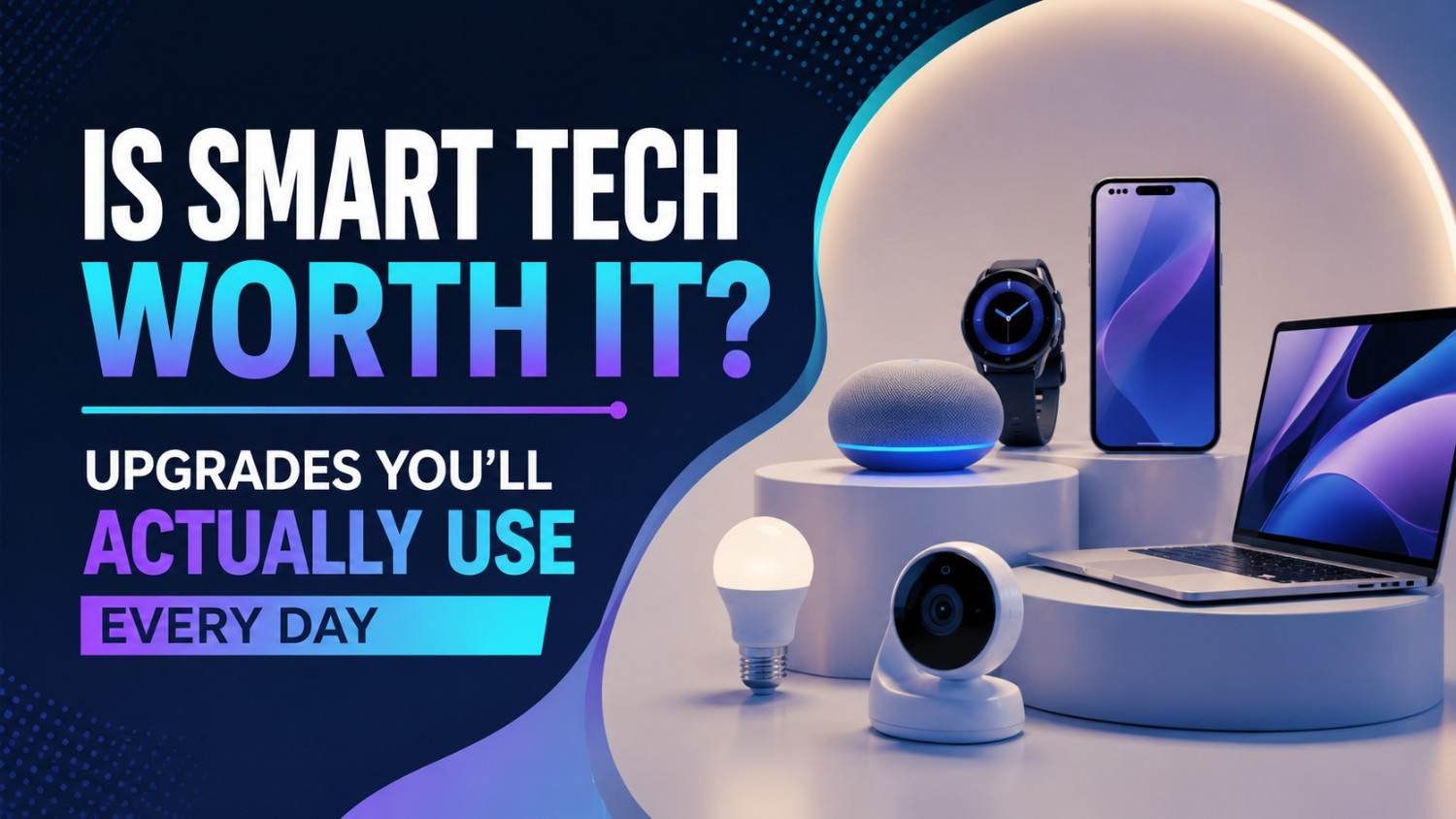
Smart tech has started feeling like normal everyday stuff now, kinda, but it still promises to make houses more convenient, energy efficient, and secure, all at once. You know the drill, voice controlled speakers and smart lights, robot vacuums and “learning” thermostats, the shelves online are packed with gadgets that say they’ll save time and smooth out your daily routine. Still, when there’s so much out there, it’s hard not to ask yourself if these devices are actually useful, or if they’re just pricey fashions. Some smart tools really do deliver long-term value, but others have features that sound impressive at first, and then they just… don’t show up in your day to day, not after the first week or two. So picking well means you have to sort through the noise, understand which technologies solve real problems, not ones that quietly add complexity.
Good news though, smart technology doesn’t have to turn into a situation where your home is filled with dozens of connected devices. The most worthwhile upgrades are often the simplest kind, like products that handle repetitive chores, boost safety, lower energy use, and generally make everyday life less annoying. Whether you’re building your first smart home, or you’re thinking about what actually deserves an upgrade next, going for practical tech can raise your quality of life, while still keeping the value real and lasting. In this guide we’ll walk through which smart tech improvements are genuinely worth considering, how they mesh with real daily habits, and what to pay attention to before you spend money on your next purchase.
What Makes Smart Technology Worth Buying?
Not every smart device really gives you the same kind of value, at least not in practice. The best tech, well it should solve something that actually shows up day to day, it cuts down on time wasted, gives you more convenience, or supports safety. without you having to constantly watch over it. Something that slips into your normal routine becomes way more useful than a gadget full of clever features you barely touch. So when you’re judging Smart Tech, don’t overthink it, just ask a few simple things. Is it reducing repetitive work, like for real? Does it make comfort better or security stronger, not just on paper. And will everyone in the household use it, or will it end up in a drawer somewhere. If the answers lean yes, then that investment is probably worth it. In general, technology should simplify life, not add an extra layer of trouble.
Smart Speakers Become Everyday Assistants
Smart speakers usually are one of those first upgrades that people pick up, and for pretty good reasons too. Because devices with voice assistant functions inside let users do things like switch lights on , put on music, see what the weather is doing, create reminders, handle a shopping list, and answer questions without ever touching a screen. Not just entertainment, they also help with everyday pacing, like alarms and timers, calendar pings, and little routines you can kick off. Families tend to lean on them for quick messages, hands free cooking help, and for running compatible smart things around the house. For a lot of homes, a smart speaker turns into one of the most used gadgets within just days after it’s installed.
Smart Lighting Offers More Than Convenience
At first glance, smart lighting might look like some kind of luxury, but it really gives a few practical advantages, too. Smart bulbs and switches let people steer lighting from a distance , make it run on timers for automatic on and off moments, and tweak brightness depending on what you are doing or the time of day . For instance, lights can slowly ramp up in the morning, so the wake up feels softer, or they can switch off by themselves once everyone leaves the house. Those little automations add convenience , and at the same time, they cut down on wasted electricity.
Benefits of Smart Lighting
- Remote control from your phone.
- Custom schedules.
- Adjustable brightness.
- Improved home security while traveling.
- Better energy efficiency.
Lighting automation is one of the easiest ways to experience the benefits of Home Automation.
Smart Security Brings Greater Peace of Mind
Home security technology has become maybe more accessible than ever, and it feels like smart doorbells, security cameras, motion sensors, and smart locks all just sort of blend into daily life. With these tools, homeowners can watch their property from virtually anywhere, anytime. You get instant alerts when someone comes near the front door, or you can check live camera feeds while traveling, which adds that calm feeling—without paying for costly professional security setups. Also, modern smart security seems to smooth out normal routines, like giving a guest or delivery driver short term entry using digital locks, instead of fishing for physical keys. And yes, these security upgrades often pay off every single day, even if nothing strange ever occurs.
Robot Vacuums Save Time Every Week, Honestly
Cleaning floors is one of the most repetitive household chores, so robot vacuums turn out to be one of the more practical smart home choices. With scheduled cleaning, floors stay looking decent and tidy, and homeowners don’t have to do much. A lot of today’s models can automatically head back to the charging station, map rooms in a neat way, slip past obstacles, and even empty their own dust bins. They won’t replace every part of deep cleaning, sure, but they cut down the usual upkeep a lot. For people juggling work, busy families, and pet owners especially, this time saving tech often becomes kind of necessary, not just a nice gadget.
Smart Thermostats Improve Comfort and Efficiency
Heating and cooling take up a big slice of household energy use, like honestly most of it. With smart thermostats, people can sort of fine tune the room temperature using daily routines, who’s actually around, and their own comfort preferences. Rather than constantly tweaking the controls themselves throughout the day, users can make schedules that automatically lower energy demand when the home is empty, then bring back a cozy set point shortly before they come back in.
Advantages of Smart Thermostats
- Automatic scheduling.
- Remote temperature control.
- Lower energy bills.
- Better comfort throughout the day.
- Energy usage insights.
Over time, improved efficiency may offset much of the initial investment.
Smart Plugs Modernize Existing Appliances
Not every appliance really has to be tossed out in favor of a connected version. Smart plugs turn regular lamps, coffee makers, fans, or other small devices into remotely controlled stuff. People can set routines so the device flips on or off automatically, this can lower standby energy use , yet still makes life easier. It’s a pretty basic upgrade, but it’s also a low cost entry into Smart Home Technology, no big renovations needed. Honestly, sometimes the tiniest upgrades give the most day to day usefulness.
Smart Kitchen Devices Can Ease Routine Workflows
Cooking tech has gotten better too, like a quiet upgrade in the background. Smart coffee makers can brew your morning cup without you touching anything, while connected air fryers, ovens, and multicookers can be watched from afar and guided by recipe prompts through smartphone apps. Of course, fancy cooking tech isn’t mandatory for every home, but it can still simplify meal prep for busy professionals, and families. The real win is cutting the repeat tasks , not piling on extra complication.
Health and Wellness Technology Continues to Improve
Wearable devices have moved well past just counting steps, you know. A lot of them now track heart rate, sleep quality, physical activity, stress level and even workout output while still giving those small nudges so you stay moving. Instead of overriding medical guidance, these gadgets push you toward better habits, mainly by making you more aware of how your days actually run. When feedback is consistent it can quietly nudge people to train better, rest better, and keep overall wellness on track. And for someone thinking long term about health, wearable smart gadgets really can turn into handy everyday companions.
Productivity Tools Help, you stay organized
Smart tech is not only for home automation. Digital note taking, wireless charging docks, smart screens and task management apps do a lot for arranging your work along with personal responsibilities in a more efficient way. People who work remotely often like connected calendars, video conferencing equipment, and smart displays that gather schedules, reminders, and communication in one place. Tech that removes friction in regular work tends to deliver more lasting value than devices built around a bit of novelty , even if the first impression feels exciting.
Not Every Smart Device Is Worth the Cost
Even if smart technology keeps evolving pretty fast, not every connected gadget really belongs in your home. Some products come with “great” features that sound convincing at first, but later, once the initial excitement fades, they end up giving you not much real value, kinda like a show trick. Before you buy anything, try to think about how often you will actually use it. And then ask yourself, does it genuinely fix a repeating issue, or does it mostly just pile up into another device that needs upkeep, constant software updates , and charging.
Questions to Ask Before Buying
- Will I use it every day?
- Does it replace a repetitive task?
- Is setup straightforward?
- Does it integrate with existing devices?
- Will it remain useful in the future?
Thoughtful purchasing prevents unnecessary spending.
Build Your Smart Home Gradually
Making a connected home is not something you have to buy all at once. Actually , if you begin slowly you usually get better outcomes, because you find out which technologies really do make your day to day better. Start with one or two grounded upgrades, like smart lighting, or a voice assistant. When you feel settled with that, you can extend step by step, more from your own needs and less from whatever marketing trends shout today. Tending your smart home little by little also gives you a cleaner way to think through device compatibility and different platforms.
Privacy and Security Should Always Be Considered
Connected devices gather information so they can deliver personalized experiences, so digital privacy is not optional. Picking solid manufacturers, setting up strong passwords, turning on two factor authentication, and keeping software updates regular help strengthen protection. Recheck the privacy options during setup, and switch off data sharing that feels unnecessary. Careful technology habits pair everyday comfort with strong cybersecurity routines. In other words, smart living should stay safe too.
The Best Smart Tech Is the Technology You Forget About
Interestingly, the most successful smart devices end up kind of almost invisible. They do routine chores on autopilot, without you needing constant watching or attention. Lights quietly calibrate themselves. Thermostats tune temperatures with this steady patience. Robot vacuums clean up while you are away, no fanfare. Smart locks bolster security, yet you hardly need to alter your routine at all. A lot of these technologies just quietly simplify daily life, instead of insisting on ongoing back and forth. Real innovation gets judged by usefulness, not by weird complexity.
Key Takeaways
- Smart Home Technology should solve real everyday problems.
- Smart speakers simplify daily organization.
- Smart lighting improves convenience and efficiency.
- Security devices increase peace of mind.
- Robot vacuums save valuable time.
- Smart thermostats reduce energy costs.
- Smart plugs modernize existing appliances.
- Build your smart home gradually.
- Prioritize privacy and security.
- Choose practical Smart Tech over unnecessary features.
Conclusion
Smart technology is most useful when it kind of, quietly helps your everyday life through ease of use, better efficiency , and smoother organization. Instead of grabbing every single new gadget on impulse, try zeroing in on Smart Home Devices that actually handle real annoyances, save time, boost security, or cut energy use. Things like automated lighting and “learn” thermostats, plus robot vacuums and voice assistants can be practical little upgrades, and they make routines simpler without piling on unnecessary complicated stuff. And if you pick tech based on usefulness not on what’s trending, you end up with a smarter home that keeps paying off long after the shiny buzz of the latest purchase has died down.
Frequently Asked Questions
1. Is smart home technology worth the investment?
Yes, if you choose devices that solve everyday problems, improve convenience, save energy, or enhance home security. Practical upgrades often provide long-term value.
2. Which smart device is best for beginners?
Smart speakers, smart lighting, and smart plugs are excellent starting points because they’re affordable, easy to install, and useful in everyday routines.
3. Can smart home devices reduce electricity bills?
Yes. Devices such as smart thermostats, lighting systems, and smart plugs help reduce unnecessary energy usage through scheduling and automation.
4. Are smart home devices secure?
Most reputable devices are secure when users install software updates, create strong passwords, enable two-factor authentication, and review privacy settings regularly.
5. Should I build a complete smart home at once?
No. It’s usually better to start with a few practical devices, learn what fits your lifestyle, and expand gradually based on your needs and budget.









Leave a Reply